

LinkedIn Ads
- LinkedIn Ads Revenue Attribution
- LinkedIn Ads Customer Journeys
- LinkedIn Ads CRM Sync
- LinkedIn Ads Optimization
- LinkedIn Ads Benchmarks

Google Ads

Meta Ads
Cross-Channel
Ad Signals
New



LinkedIn ABM: How to Use LinkedIn for Account-Based Marketing That Actually Drives Pipeline
Account-based marketing has been talked about for years. But for most B2B teams, ABM still feels complicated, expensive, and disconnected from real revenue.
The truth is simple. ABM only works if you can consistently reach the right accounts, influence multiple people inside them, and see that influence show up in your CRM.
That is exactly where LinkedIn ABM shines.
LinkedIn is not just another ad platform. It is where your buyers think, learn, discuss, and form opinions long before they talk to sales. When used correctly, LinkedIn becomes the most powerful ABM channel in B2B.
This guide breaks down how to use LinkedIn for ABM in a practical way.
What Is LinkedIn ABM?
LinkedIn ABM is the practice of using LinkedIn’s targeting, content, and ad distribution to engage a predefined list of high-value accounts across the entire buying committee.
Instead of marketing to everyone who fits a broad persona, ABM focuses on specific companies you want to win.
- Targeting a fixed list of accounts
- Reaching multiple roles inside each account
- Running content that hits specific pains and benefits
- Using ad engagement as buying signals
- Aligning marketing and sales around the same accounts
- Measuring success at the account level, not the lead level
This is fundamentally different from traditional lead generation.
The goal is not to capture a form fill.
The goal is to create familiarity, trust, and momentum inside the right companies.
Why LinkedIn Is Perfect for ABM
If ABM is about influencing accounts, LinkedIn is the most natural place to run it.
Your Buying Committees Already Live There
Modern B2B deals involve many people. Champions, managers, executives, finance, procurement.
LinkedIn is one of the only platforms where all of them are active under their real professional identity.
This makes it uniquely suited for account-based reach.
LinkedIn Lets You Target Companies, Not Just People
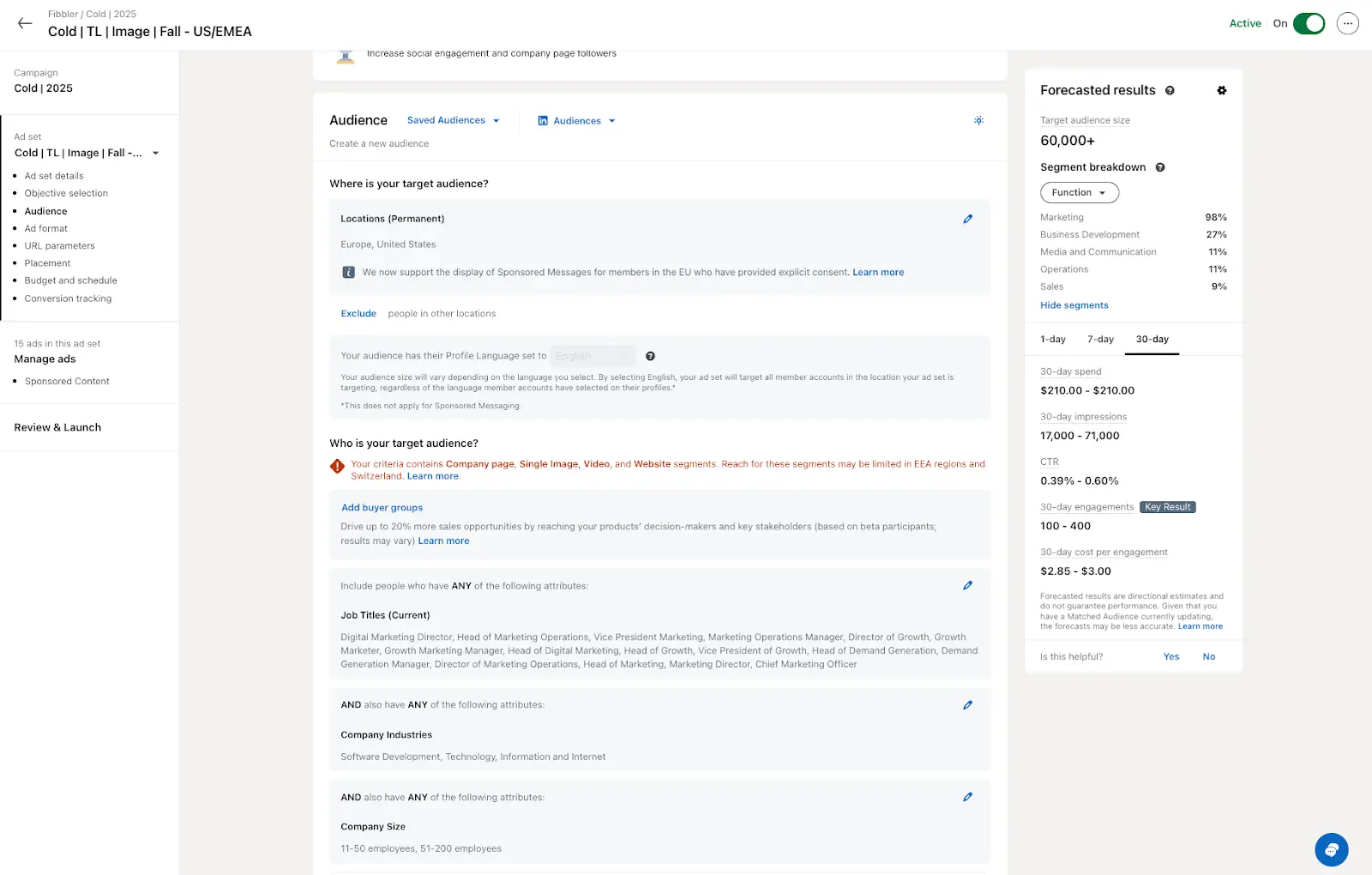
LinkedIn’s company-level targeting allows you to run campaigns that are explicitly designed around accounts.
You can target:
- Specific company lists
- Company size
- Industry
- Seniority
- Job function
- Job title
- Geography
This is the foundation of any serious ABM strategy.
Impressions Matter More Than Clicks in ABM
ABM is not about instant conversion. It is about repeated exposure.
LinkedIn is one of the few platforms where impressions are actually valuable. People scroll with intent. They remember ideas. They recognize brands. They connect the dots later.
This is why LinkedIn ABM works even when click-through rates look modest.
Organic and Paid Reinforce Each Other
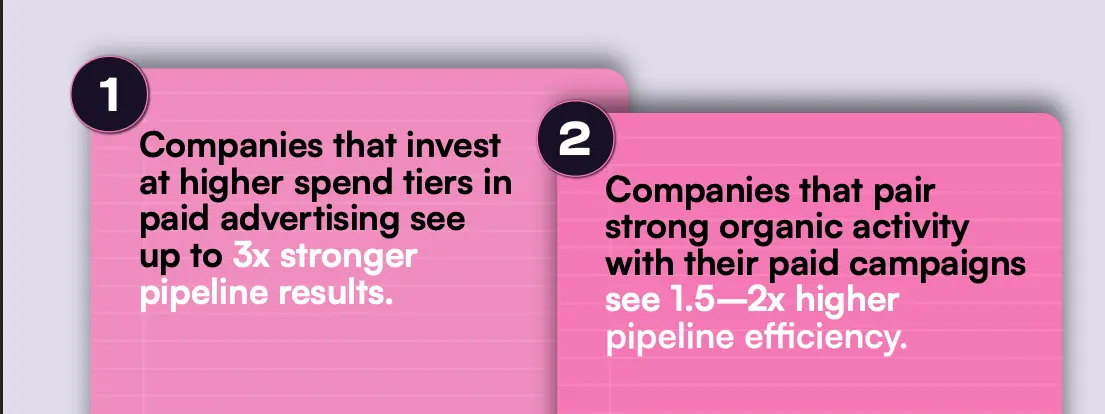
LinkedIn ABM works best when organic content and paid distribution support each other.
Organic builds credibility. Paid ensures consistent reach inside target accounts.
Together they create a compounding effect that is very hard to replicate elsewhere. This pattern shows up clearly in our Fibbler Labs benchmark report, where we analyzed over $100M in LinkedIn ad spend across hundreds of B2B companies. Teams that combined consistent paid distribution with strong organic activity saw significantly higher pipeline efficiency over time.
Planning Your ABM Campaign
Before launching anything in LinkedIn Campaign Manager, the real work happens in planning.
Setting ABM Goals and KPIs
ABM success is not measured in leads.
Clear ABM goals usually include:
- Reaching more and more target accounts
- Increased engagement inside target accounts
- Increased frequency of exposure inside target accounts
- Higher win rates on targeted accounts
- Shorter sales cycles
- Larger deal sizes
- More inbound from accounts already seeing ads
Key KPIs to define upfront:
- Account-level reach
- Account-level engagement
- Account-level frequency
- Pipeline influence
- Revenue influence
If your KPIs still revolve around CPL, you are not running ABM.
Budget Calculation
ABM requires patience and consistency.
A common mistake is underfunding ABM and expecting immediate results.
As a starting point:
- Estimate how many accounts you want to influence
- Estimate how many roles per account matter
- Plan for repeated impressions over time
- Work backwards into monthly spend
ABM budgets are usually spread across months, not weeks. The goal is steady presence, not bursts.
Account Selection and ICP Definition
Your ABM success depends entirely on account selection.
Strong ABM account lists are:
- Small enough to be intentional
- Large enough to scale reach
- Aligned with sales capacity
- Aligned with historical win data
Use data from:
- Closed-won deals
- Pipeline velocity
- Retention
- Expansion
- Sales feedback
Team Alignment
ABM only works when marketing and sales are aligned.
This means:
- Shared account lists
- Shared definitions of engagement
- Clear handoff rules
- Regular feedback loops
- Visibility into the same data
If sales does not trust marketing signals, ABM breaks instantly.
How to Run Your LinkedIn ABM Campaign
This is where most teams struggle. The execution matters more than the theory.
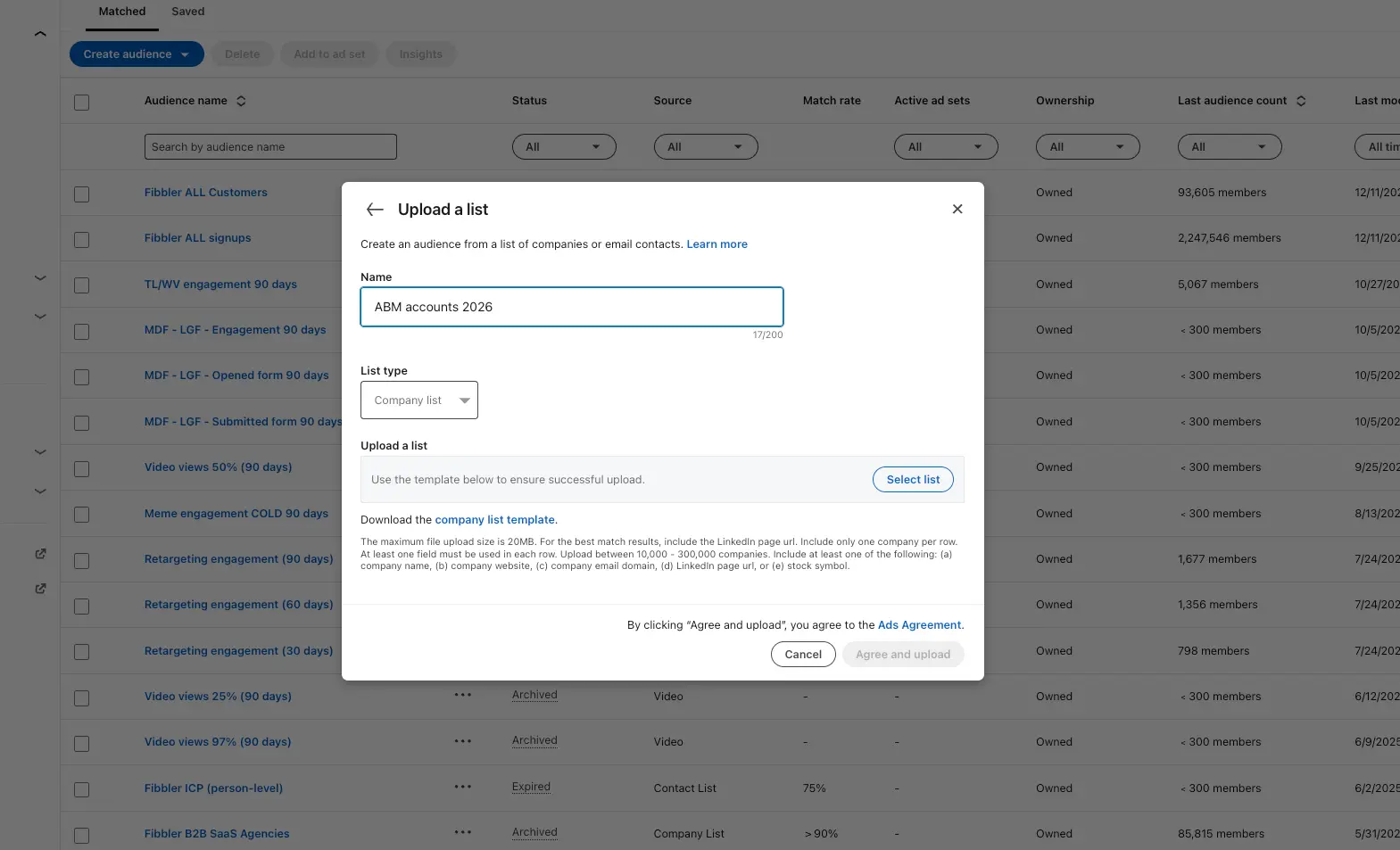
Step 1: Build Your Target Account Lists
Everything starts with clean account lists.
Your list should include:
- Company name
- Domain
- LinkedIn page URL
Upload this list into LinkedIn as a Matched Audience.
Step 2: Identify Decision-Makers and Shared Buying Tensions
Inside each account, multiple roles influence the deal. But in practice, it is rarely realistic or necessary to create completely separate messaging for every role.
Most ABM programs fail because they over-segment and under-communicate.
The goal is not to create five different messages. The goal is to find the shared problems and outcomes that matter across the buying committee.
Most roles care about different details, but they often agree on the same core tensions:
- Things are hard to measure
- Decisions feel risky
- The current setup creates friction
- Reporting is fragmented
- Teams are not aligned
- Revenue impact is unclear
These shared tensions are where ABM messaging works best.
Instead of building isolated personas, define:
- The common pain most roles recognize
- The outcome everyone wants to avoid failing at
- The belief that needs to change for progress to happen
For example, in many B2B SaaS purchases:
- The economic buyer wants confidence
- The champion wants internal credibility
- The operator wants simplicity
- Finance wants predictability
Different motivations, but the same underlying need: clarity and reduced risk.
Your messaging should anchor on these shared problems and benefits, while allowing individuals to project their own role-specific meaning onto the message.
ABM works when the message is clear enough to be remembered and broad enough to resonate across the committee, even if the details land differently for each person.
Step 3: Rethinking Stages in LinkedIn ABM
Traditional ABM frameworks often talk about awareness, consideration, and validation as clean stages. In reality, buying committees do not move through journeys in sync.
Inside the same account, you can have:
- One person just becoming aware
- Another already comparing vendors
- A third who has been burned before and needs proof
If you structure campaigns strictly by stage, you assume everyone is at the same point. That assumption is almost always wrong.
On LinkedIn, you also cannot control when or how people engage. Content is consumed passively, out of order, and often without clicks.
Because of this, LinkedIn ABM works best when all accounts are exposed to a mix of content types at the same time.
Instead of stages, think in terms of coverage.
Your goal is to ensure that anyone inside a target account can encounter content that matches where they personally are, without you needing to predict it.
This means running content in parallel that covers:
- High-level problems and market shifts
- Practical insights and frameworks
- Opinions that challenge existing thinking
- Evidence, data, and real examples
- Light product context without heavy pitching
Some people will resonate with the problem first. Others will latch onto proof. Some will only care once a trigger event happens.
Your job is not to sequence content perfectly. Your job is to be present with the right ideas when timing becomes relevant for them.
This approach simplifies ABM execution significantly.
You do not need complex campaign trees or funnel logic. You do not need to guess intent too early. You do not need to force accounts into artificial stages.
Instead, you:
- Run multiple content angles consistently
- Let engagement patterns reveal intent over time
- Use account-level signals to guide sales outreach
- Measure influence, not progression
With tools like Fibbler, this model becomes measurable. You see which accounts are engaging more frequently, which campaigns resonate, and when momentum builds.
Sales can then act on real behavior instead of assumed stages.
ABM is not about moving people through steps.
It is about creating enough relevant exposure that when buying starts, you are already trusted.
Step 4: Configure LinkedIn Audiences and Targeting
Use your account lists as the foundation.
Layer targeting by:
- Job function
- Seniority
- Job titles
- Geography
Avoid over-layering. If your audience gets too small, delivery suffers.
ABM is about reaching enough people inside each account, not perfect precision.
Step 5: Launch Your LinkedIn Ad Campaigns
Content selection matters more than ad formats with LinkedIn campaigns.
The strongest ABM creatives on LinkedIn are:
- Thought Leader Ads
- Educational single-image ads
- Simple video explainers
- Data-backed insights
Avoid product demos in early stages.
Your best performing ABM ads will usually look like organic posts, not ads.
Thought Leader Ads are especially effective because they carry human credibility while still being scalable.

Step 6: Connect LinkedIn Ads to Your CRM (with Fibbler)
This is where most ABM programs fall apart.
LinkedIn shows engagement. Your CRM shows pipeline.
Without connecting them, you are blind.
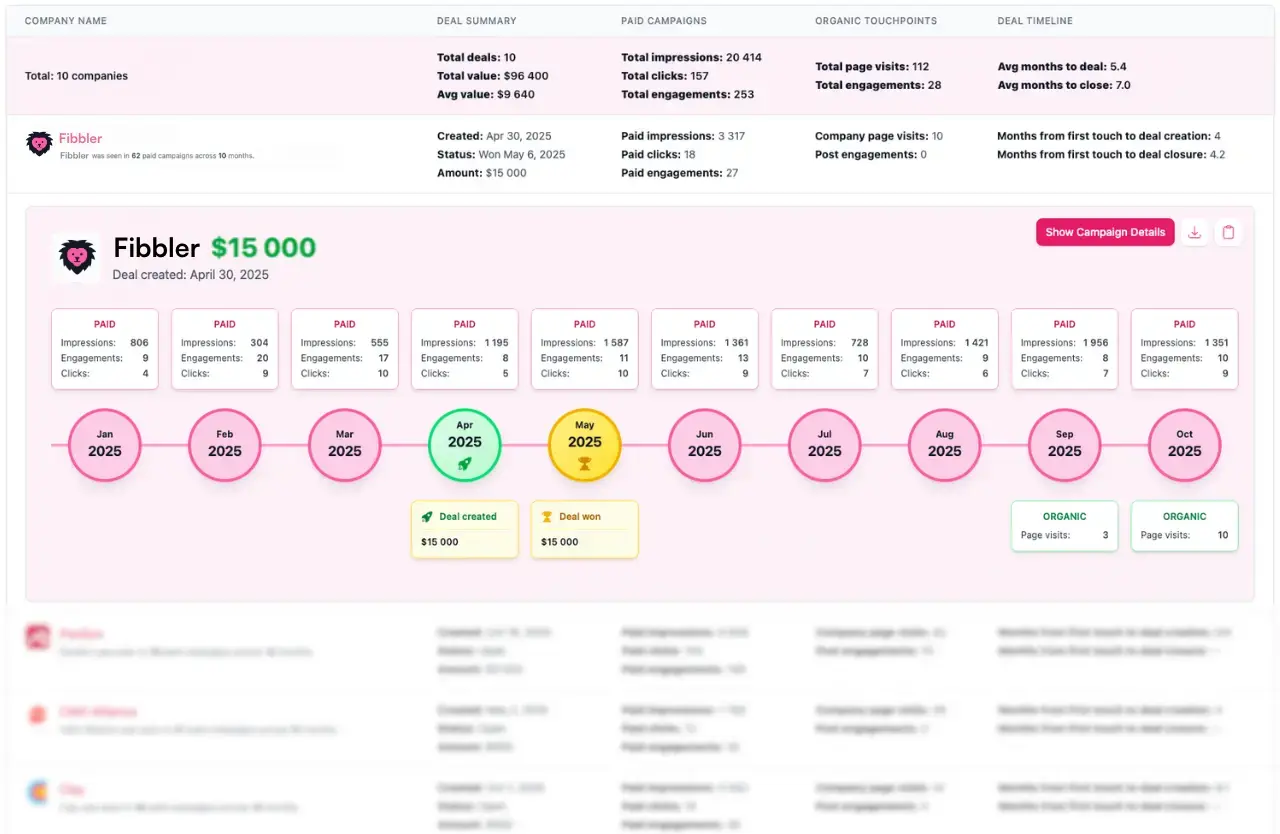
Fibbler solves this by matching LinkedIn impressions, engagement, and ad activity directly to company records in your CRM.
This lets you:
- See which accounts are being exposed
- Track repeated engagement over time
- Identify warming accounts
- Align marketing and sales on real signals
- Measure influenced pipeline and revenue
Without this connection, ABM remains a guessing game.
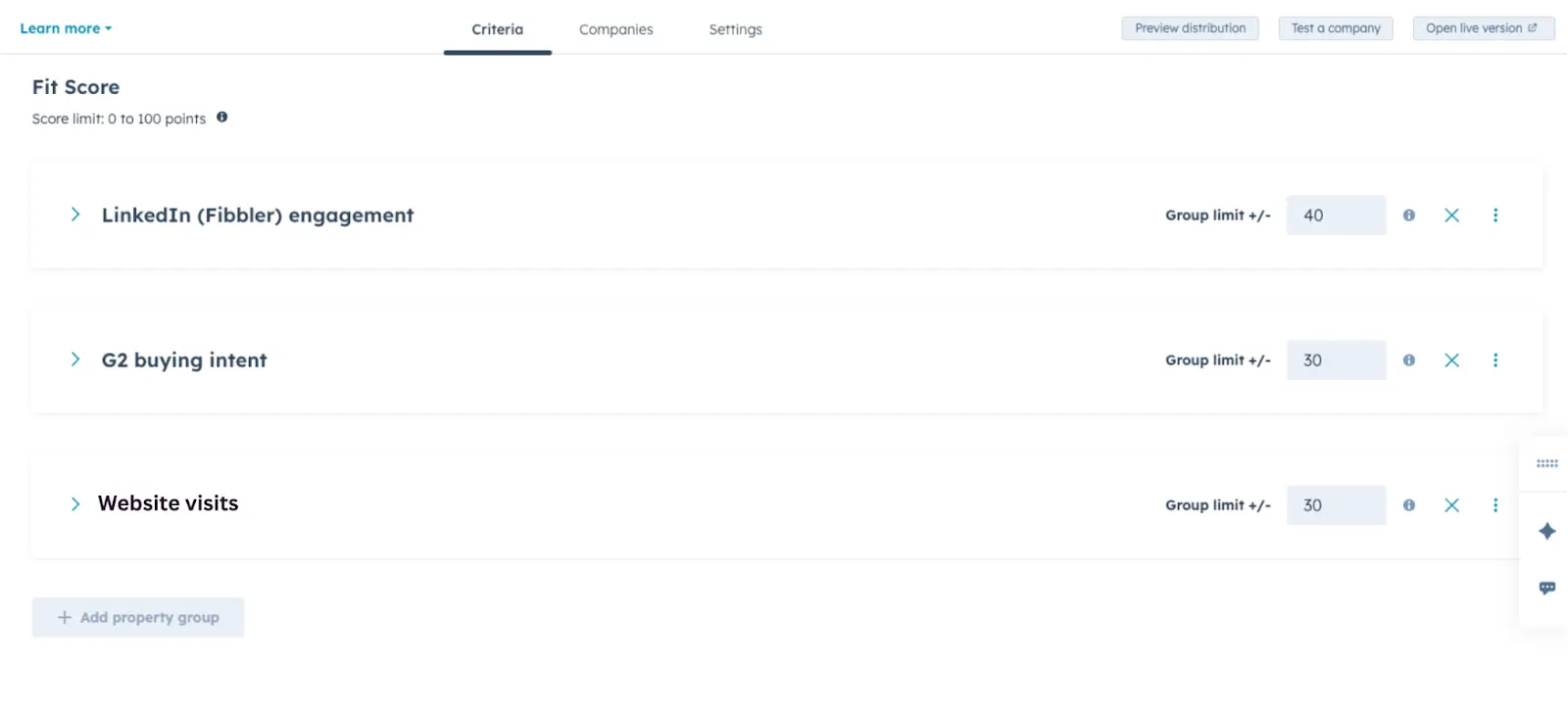
Step 7: Set Up Account Scoring and Stage Automation
Once engagement data flows into your CRM, you can score accounts.
Examples of scoring signals:
- Number of ad engagements
- Number of organic engagements
- Specific campaign engagements
Accounts that cross certain thresholds can be sent to sales.
This creates a clear and scalable ABM operating system.
Step 8: Coordinate Sales Outreach Based on Engagement
This is where ABM becomes real.
Sales outreach should be triggered by engagement, not cold timing.
When sales knows:
- Which account engaged
- What campaign they engaged with
- How often they have seen your brand
Outreach becomes relevant instead of interruptive.
This is how ABM shortens sales cycles instead of slowing them down.
Measuring and Optimizing Performance
ABM measurement requires a mindset shift.
Key Metrics to Track
The most important LinkedIn ABM metrics are:
- Number of reached accounts
- Number of engaged accounts
- Pipeline influence
- Revenue influence
Building Reporting Dashboards
Your ABM dashboards should answer simple questions:
- How many accounts are we reaching?
- Which accounts are warming up?
- How much pipeline are we influencing?
- Which accounts convert fastest after engagement?
These dashboards should be visible to both marketing and sales. Shared visibility removes guesswork and builds trust.
There are two practical ways teams solve this with LinkedIn ABM.
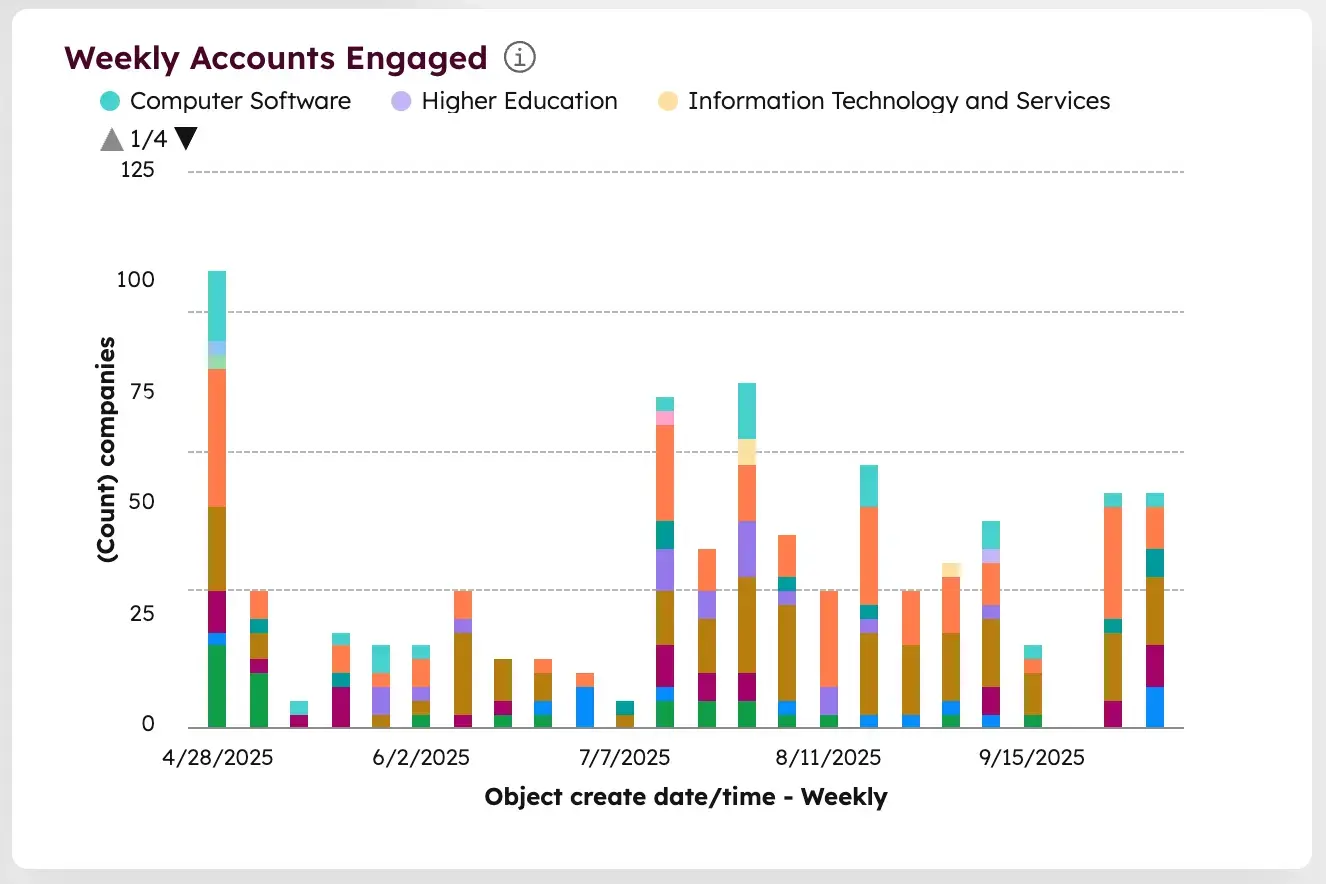
The first is using native, purpose-built dashboards inside Fibbler. Fibbler automatically matches LinkedIn Ads and organic engagement to companies in your CRM and visualizes it in clear views like:
- Company Insights to see which accounts are engaging over time
- Campaign Analytics to understand which campaigns drive engagement
- Customer Journeys to see how LinkedIn activity shows up before pipeline and revenue
This gives teams an immediate, opinionated view of what matters without needing to build anything from scratch.
The second approach is sending LinkedIn Ads data directly into the CRM at the company level. This allows teams to build their own reports, dashboards, and workflows using the tools they already trust.
With company-level LinkedIn data available in the CRM, teams can:
- Create custom ABM dashboards
- Trigger sales outreach based on engagement
- Build account scoring models
- Tie LinkedIn activity to pipeline stages and revenue
Many teams use a combination of both approaches.
They rely on Fibbler’s in-app views for fast insight and use CRM-based reporting for deeper customization and automation.
For teams looking for inspiration, Fibbler maintains a library of real-world user playbooks that show how others have built ABM reporting, workflows, and sales alignment using company-level LinkedIn data.
These examples help teams avoid reinventing the wheel and move faster with proven setups.
Common Pitfalls and How to Avoid Them
Even experienced B2B teams make the same ABM mistakes. Not because they lack skill, but because ABM is often approached with the wrong assumptions.
Technical Limitations
One of the most common ABM failures is not the lack of data in LinkedIn, but the lack of connection between LinkedIn engagement and CRM reality.
LinkedIn’s Company Engagement tab already shows which companies are interacting with your ads. That insight is useful. But it stops there.
What LinkedIn does not show is:
- Which of those companies already exist in your CRM
- Which opportunities are already open
- Which deals are being influenced right now
- Which campaigns appear before pipeline is created
- Why some engaged accounts convert while others do not
This becomes especially problematic in ABM, where success depends on patterns over time and context, not isolated engagement.
Seeing that a company engaged is only the first step. ABM only becomes actionable when you can connect that engagement to:
- Specific accounts
- Specific opportunities
- Specific revenue outcomes
Without that CRM-level granularity, teams either underestimate impact or optimize toward surface-level signals like clicks and CTR, instead of influence.
How to avoid it: Send LinkedIn Ads engagement into your CRM at the company level and analyze it alongside pipeline and revenue data. Tools like Fibbler make this possible by enriching CRM accounts with LinkedIn impressions and engagement, allowing teams to see which deals are being influenced, what campaigns are driving momentum, and how engagement patterns relate to closed-won outcomes.
This turns LinkedIn ABM from an observation channel into a decision-making system.
Campaign Structure Mistakes
Many ABM teams either overcomplicate campaign structures or oversimplify them.
A common mistake is trying to force buyers into rigid awareness, consideration, and validation stages. Another is running one generic campaign and hoping it covers everything.
Both approaches fail because buying committees are non-linear and individuals inside the same account are at different points simultaneously.
Strict stage-based campaigns assume alignment that does not exist. Single-campaign setups remove clarity and learning.
How to avoid it: Structure campaigns around content angles, not buyer stages. Run multiple content types in parallel that cover shared pains, perspectives, proof, and practical insight. Let engagement behavior reveal intent over time instead of trying to predict it upfront.
This keeps delivery flexible while still producing clean engagement signals.
Budget Allocation Issues
A common misconception in ABM is that success comes from targeting a very small number of accounts as deeply as possible.
In reality, most B2B buyers are not in-market at any given moment. Research consistently shows that only a small percentage of potential buyers are actively evaluating solutions right now. If your ABM strategy only focuses on a narrow list, you risk missing demand when it actually appears.
ABM on LinkedIn works best when you reach as many relevant buyers as your budget allows, while still maintaining enough frequency for your message to be remembered.
The problem is not account volume. The problem is losing relevance or visibility entirely.
Targeting too few accounts limits future pipeline. Targeting too many without enough budget reduces signal strength. The balance sits in between.
How to avoid it: Start with the broadest account universe you can afford to reach meaningfully. Prioritize consistent presence and clear messaging over extreme depth. Because you never know which accounts are in-market, broad coverage ensures you are present when demand appears.
Use engagement data to identify which accounts are showing early signals, then increase frequency through retargeting for those accounts. This allows you to shift from wide coverage to deeper presence naturally, without guessing intent upfront.
With company-level engagement tracking in place, teams can widen the top of their ABM universe without losing control. Budget naturally concentrates over time as attention clusters around accounts that show real buying behavior.
This approach ensures you are present when demand appears, not just when you expect it.
Final Thoughts
LinkedIn ABM works when you stop treating LinkedIn like a lead machine and start treating it like an influence engine.
Reach the right accounts.
Show up consistently.
Measure what actually matters.
Align sales and marketing around shared signals.
ABM is not about perfection.
It is about relevance and timing.
And when LinkedIn ABM is connected properly to your CRM, it becomes one of the most predictable ways to build pipeline in modern B2B.
Written by

Adam Holmgren
CEO @ Fibbler

Prove paid ads drive pipeline
Fibbler helps you see which companies view or engage with your LinkedIn, Google and Meta Ads, and connect them to pipeline and revenue in your CRM.
Try 30 days for free
Prove paid ads drive pipeline
Fibbler helps you see which companies view or engage with your LinkedIn, Google and Meta Ads, and connect them to pipeline and revenue in your CRM.
Try 30 days for free