

LinkedIn Ads
- LinkedIn Ads Revenue Attribution
- LinkedIn Ads Customer Journeys
- LinkedIn Ads CRM Sync
- LinkedIn Ads Optimization
- LinkedIn Ads Benchmarks

Google Ads

Meta Ads
Cross-Channel
Ad Signals
New



How to Use LinkedIn for B2B Marketing (2026 Guide)
LinkedIn has become the most important channel in B2B marketing. It is where decisions are shaped, where buying committees spend time and where brands build long term trust. If you know how to use LinkedIn the right way, you can create a predictable engine for awareness, demand and pipeline without relying on hacks or guesswork.
The problem is that most companies still treat LinkedIn like a place to post product updates or company news. But LinkedIn today rewards clarity, value, consistency and personality. Your buyers want to learn from people who actually do the work. They trust human voices far more than faceless corporate pages.
This guide breaks down exactly how to use LinkedIn for B2B marketing in a simple and practical way. No overcomplicated frameworks. Just what actually works for teams growing pipeline, revenue and brand.
What Is B2B Marketing on LinkedIn?
B2B marketing on LinkedIn means using the platform’s content, ads, and professional data to influence your ideal buyers long before they enter a sales process. It is about being visible, being useful, and being remembered.
Unlike other platforms where business content feels out of place, LinkedIn is built for it. People log in to get better at their work. They consume information, look for solutions, and follow creators who teach them something valuable.
B2B marketing on LinkedIn combines:
- Organic content from your company and team
- Paid distribution to reach the right people
- Personal branding from founders and leaders
- Conversations inside your niche
- CRM-level measurement
- Retargeting warm audiences
- Thought Leader Ads that scale your best posts
- A long-term strategy instead of a short-term lead gen mindset
When all of this connects, LinkedIn becomes a compounding channel. Not just for attention, but for real business outcomes.
Setting Up Your LinkedIn Presence
Before executing a strategy, you need a strong foundation. This includes your company page, personal profiles and brand identity.
Creating and Optimizing Your Company Page
Your company page is your digital storefront. It is where buyers go when they want to learn about your product or understand who you are.
- Use a simple, honest tagline
- Add a banner with your main value proposition
- Write a clear, friendly About section
- Add specialties using relevant keywords
- Update your page regularly with quality posts. Not just memes for the sake of memes, but content that actually helps your audience get better at their job.
- Highlight case studies and customer wins
- Use your brand visuals consistently
A clean, trustworthy company page supports everything else you do.
Keyword Optimization for Search
LinkedIn is also a search engine. People search for tools, services and topics.
- Your headline
- Your company description
- Your specialties
- Your organic content
This helps people discover you even if they have never heard of you before.
Showcase Pages for Multiple Brands
If you have multiple product lines or audiences, Showcase Pages let you create sub-brands.
- A page dedicated to enterprise solutions
- A page for community or events
- A page for a product extension
This keeps your messaging clean and targeted.
Promoting Your Page
Company page growth is hard for everyone. But you can speed it up by:
- Invite 250 of your connections to it monthly
- Asking employees to follow and engage
- Mentioning the page in personal posts
- Linking it in your email signatures
- Adding it to newsletters
- Boosting top organic posts with ads
- Using Follower Ads if needed
Why LinkedIn Matters for B2B
LinkedIn is the only major platform built around professional identity. Your audience is not there to kill time. They are there to learn, think, connect and understand the market. That is the perfect context for B2B brands.
Here is why LinkedIn is so powerful for B2B:
- Your ICP Is Already Active on LinkedInNo matter what you sell, your buyers are likely here. CMOs, heads of growth, founders, CFOs, CTOs, managers, operators, teams across SaaS and tech. They scroll during lunch, between meetings and before their day starts. Showing up consistently means showing up when they are already paying attention.
- B2B Content Feels Native HereYou do not have to fight against entertainment algorithms. People want practical insights, frameworks, stories, benchmarks, mistakes to avoid and real examples. They want to follow people who think like them. This is why strong organic content gets disproportionate reach.
- LinkedIn Reaches Entire Buying CommitteesMost B2B purchases involve several stakeholders. LinkedIn lets you reach all of them in one place. Everyone from the champion to the budget holder sees your message. This creates familiarity across the whole organization, not just one contact.
- LinkedIn Builds Trust Long Before a Sales ConversationThis is the real magic. Someone sees your content today. They engage for weeks. They start to trust you. And then, when they have a need or a trigger event, they remember your name more than any competitor. This is how demand is created.
- Organic and Paid Reinforce Each OtherIf your organic content is strong, your ads perform better. If your ads are consistent, your organic posts get more traction. This creates a flywheel effect that is unique to LinkedIn.
- You Can Finally Track Account-Level EngagementClicks are rare on LinkedIn, but impressions matter. People see your content, remember it and later search for your product. Syncing LinkedIn activity to your CRM helps uncover this hidden attribution layer. You see which companies repeatedly engage, show intent and later enter your pipeline.With tools like Fibbler, this becomes incredibly simple. Fibbler connects your LinkedIn impressions, engagements and ad activity directly to your CRM, so you can finally see how LinkedIn warms accounts over time. This makes LinkedIn far more measurable than most people assume.
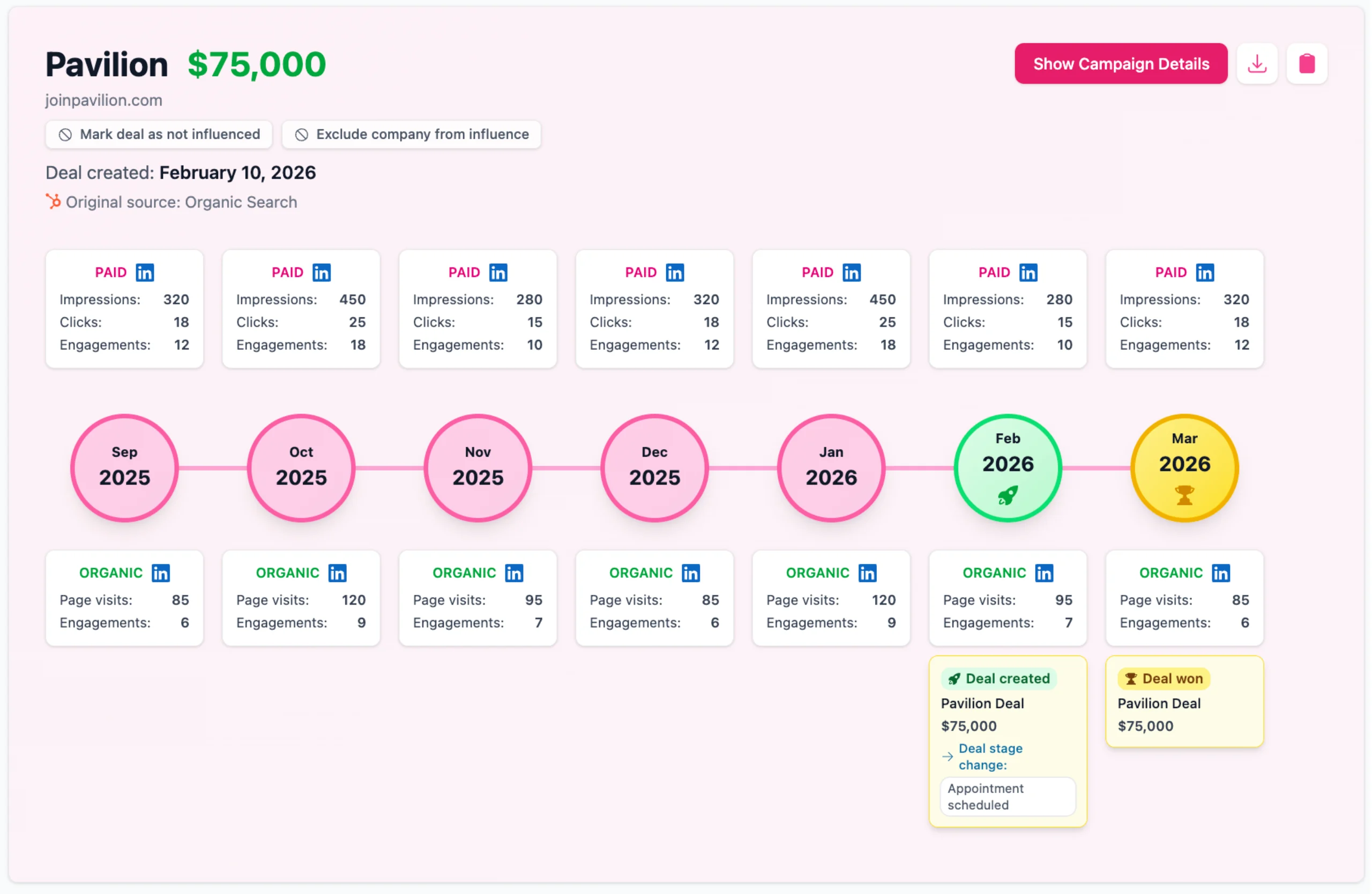
How to Execute Your B2B LinkedIn Marketing Strategy
This is where we expand deeply. Your strategy should follow these steps:
- Define your goals and audience
- Build a content calendar
- Create high-performing content
- Post at optimal times
- Build relationships through engagement
- Launch Thought Leader Ads
- Track engagement and sync to CRM
Step 1: Define Your Goals and Audience
LinkedIn becomes ten times easier when you know exactly who you are talking to.
Define:
- Your ICP
- Their job titles
- Their pains
- Their beliefs
- Their misconceptions
- Their buying triggers
- What they need to know before coming in-market to buy
Your entire content strategy comes from this foundation.
Step 2: Build Your Content Calendar
Your calendar should create rhythm, not restriction. A simple weekly structure works:
- Two educational posts
- One tactical post
- One story or personal insight
- One visual or carousel
- One repurposed post from a previous week
This mix builds trust, expertise and personality.
You can also use themed weeks, like:
- “LinkedIn Ads Week”
- “Attribution Week”
- “Mistakes Marketers Make Week”
This helps you go deep on topics your audience cares about.
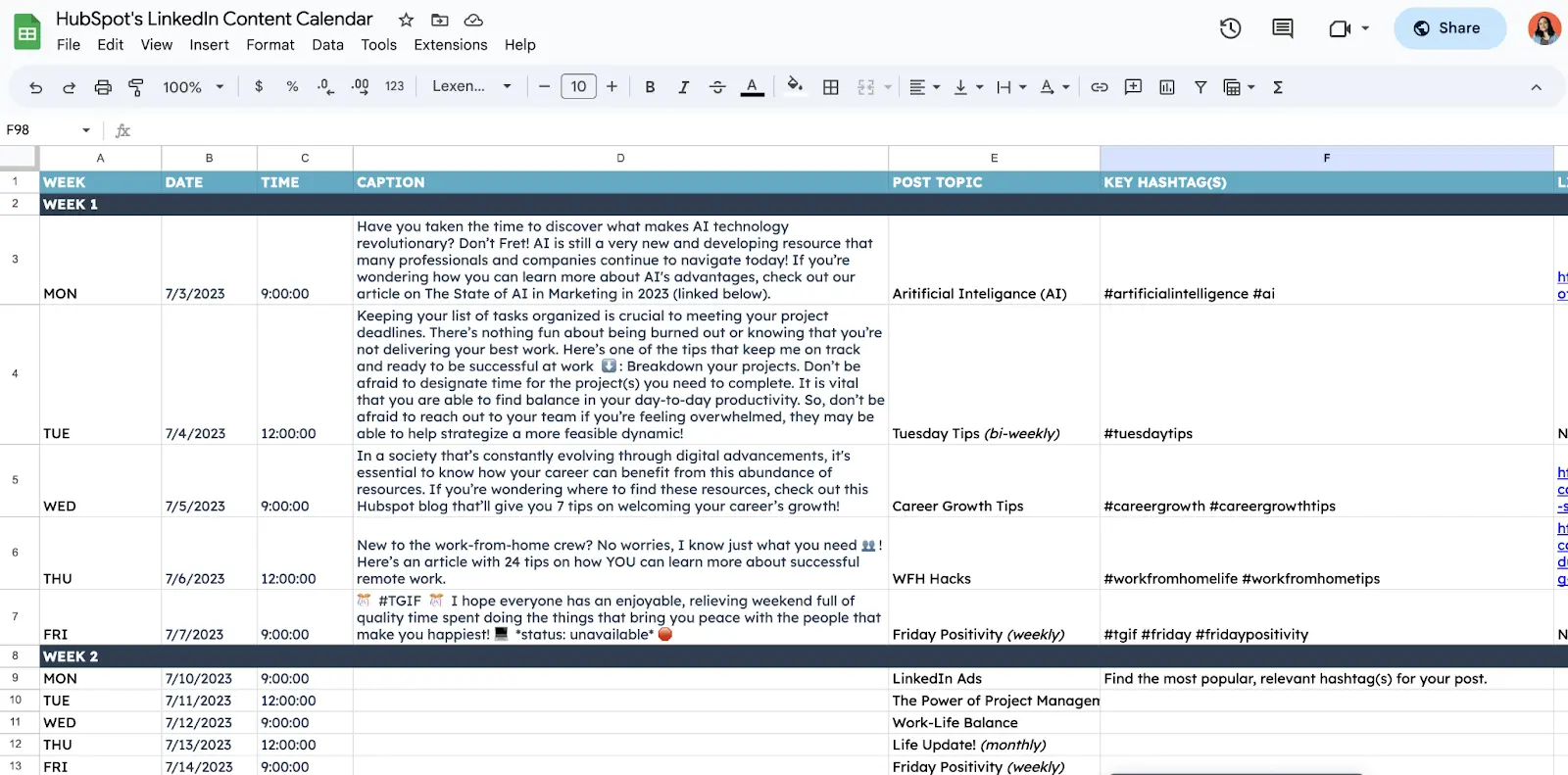
Source: HubSpot
Step 3: Create High-Performing Content
The best LinkedIn content is simple, human and useful. It teaches or challenges or inspires.
Strong patterns include:
- A quick insight from your own experience
- A story with a clear lesson
- Tactical frameworks
- Real examples from customers
- Benchmarks
- Before and after moments
- Screenshots of real data
- Honest opinions backed by reasoning
Every great post starts with one clear point, not five.
Step 4: Post at Optimal Times
Good posting windows:
- Tuesday to Thursday
- 08:00–11:00
- 13:00–16:00
But the real rule is:
Post when you have something useful to say. If you can help your audience, timing matters a lot less.
Step 5: Build Relationships Through Engagement
Comments and conversations are your unfair advantage.
Engagement habits:
- Comment on ICP posts daily
- Reply to comments fast
- Encourage discussions under your posts
- Engage from employee accounts
- Support creators in your space
- React to customer wins
- Add insight to industry posts
Every comment is a touchpoint that builds trust.
Launch LinkedIn Ad Campaigns
If you want to scale what already works organically, Thought Leader Ads are the most effective ad format on LinkedIn today. They take your strongest personal posts and put them in front of thousands of people outside your network, without losing the authenticity of organic content.
This matters because buyers trust people more than brands. Research shows that content shared by employees receives 8x more engagement than content shared by brand channels, and people are3x more likely to trust content from individuals than fully-branded content. Thought Leader Ads let you tap into this natural behavior at scale.
And unlike traditional ads, they appear in the feed exactly like regular posts from a person, which makes them far more engaging across cold and warm audiences.
1. Use Thought Leader Ads for the Cold Layer (around 80 percent of budget)
When targeting cold audiences, the goal is simple: deliver ideas and insights that get attention from people who have never heard of you.
The types of posts that perform best in cold Thought Leader Ads are:
- Industry trends
- Company or personal growth stories
- Tactical frameworks and how-tos
These formats educate without feeling pushy, and they align closely with what already works organically on LinkedIn.
For cold distribution, Thought Leader Ads usually perform best with:
- The Engagement Objective
- The Single Image ad format
This combination keeps reach high and cost efficient, while letting the content speak for itself.
2. Retarget Warm Audiences with Sharper, More Opinionated Content
Once someone engages with a Thought Leader Ad, they move into the warm layer. Here, you can go deeper and be more direct.
Strong warm-layer posts often include:
- A product point of view connected to a broader industry debate
- A challenge to outdated thinking in your category
- A comparison between the old way and the new way
- Data or insights that strengthen your position
Because warm audiences already have context, more pointed content works well without feeling aggressive.
Retargeting pools typically include:
- People who engaged with your Thought Leader Ads (90 days)
- Website visitors (90 days)
- Company page visitors (90 days)
This creates a clean, high-intent audience that progresses naturally through your content ecosystem.
3. Amplify Your Strongest Organic Posts
One of the biggest advantages of Thought Leader Ads is how well organic performance predicts paid performance.
A simple rule applies:
If a post resonated strongly with your organic audience, it is likely to perform well as a Thought Leader Ad.
Teams often use metrics like:
- High engagement relative to follower count
- A meaningful comment thread
- Strong saves or shares
Before promoting a post, add a clear CTA at the end with a link for people who want to learn more. This helps create a smooth bridge between education and exploration without making the content feel like an ad.
4. Cut Underperforming Ads Quickly
Thought Leader Ads make optimization simple. Two metrics matter most:
- Overall click-through rate (CTR)
- The percentage of clicks that become landing page visits
High-performing Thought Leader Ads tend to drive both strong engagement and a healthy share of deeper clicks. If an ad is not showing early signs of traction, cut it fast. Poor-performing creative rarely turns around with time.
This approach keeps budgets focused on content that already proves it can influence the right people.
5. Engage the Accounts that Interact with Your Ads
Thought Leader Ads do more than generate engagement; they reveal which companies are paying attention.
Checking the Company Engagement tab inside LinkedIn lets you:
- Identify companies showing frequent engagement
- Spot emerging intent
- Connect with the right titles at those accounts
- Start conversations at the perfect moment
This turns passive engagement into active pipeline opportunities.
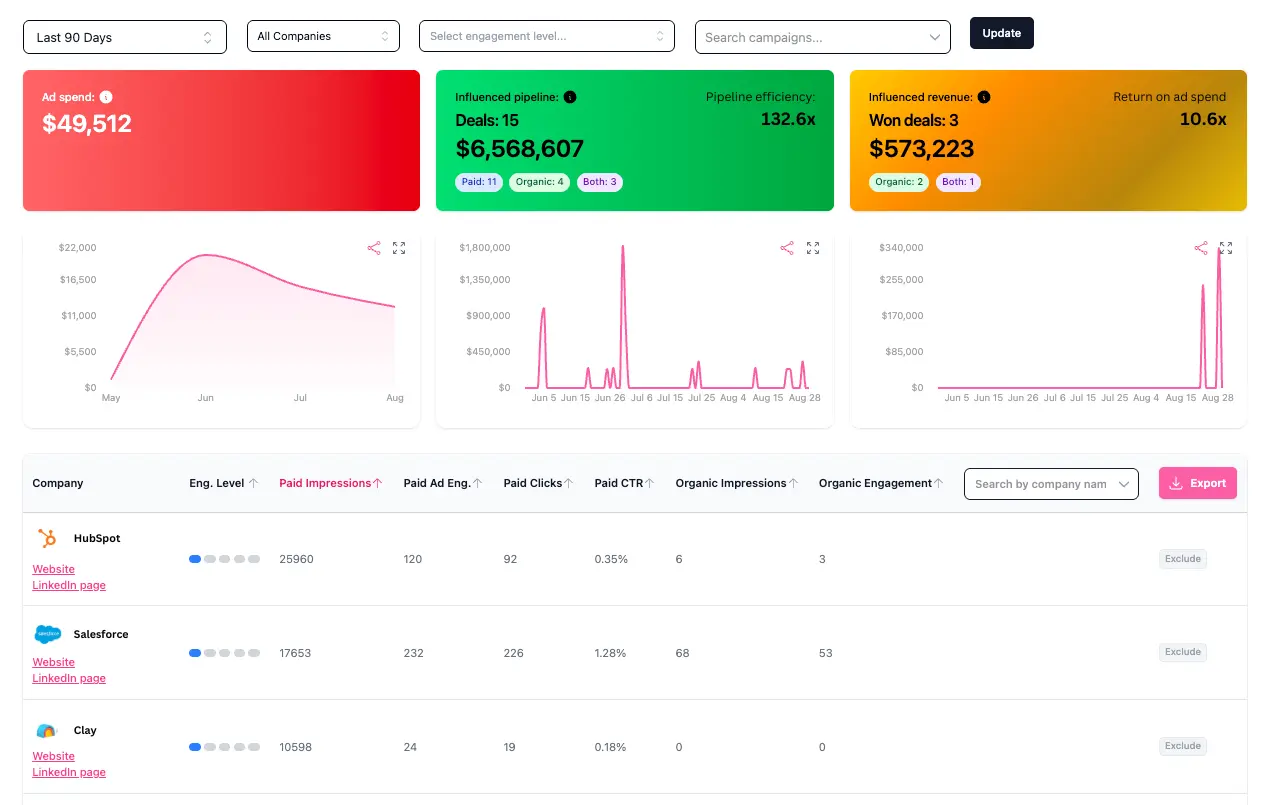
With tools like Fibbler, teams can make this workflow even smoother by syncing Thought Leader Ad engagement directly into the CRM. Sales and marketing can instantly see which accounts are heating up and what content triggered the interest.
Why this matters
Thought Leader Ads are the perfect bridge between organic content and scalable paid distribution. They help you:
- Promote your strongest ideas
- Reach your ICP far outside your network
- Create familiarity across entire buying committees
- Warm accounts naturally over time
- Bring engagement signals directly into the CRM
It is the most human, most natural and most efficient way to useLinkedIn ads in B2B today.
Measuring Performance and Optimization
Measuring LinkedIn in B2B isn’t about chasing clicks or leads. Buyers rarely move in straight lines. They see your content, remember your brand, talk internally and show up in your CRM weeks or months later through a different channel.
So instead of measuring LinkedIn like a performance channel, you measure it like an awareness and influence channel.
And that comes down to three critical signals:
- 1. Reaching the Right PeopleGood results on LinkedIn always start with reach, but not reach in the “big number” sense.
You want to know:
Are we reaching companies inside our ICP?
Are multiple people from those companies seeing our content?
Are we reaching them often enough for familiarity to form?
One-off impressions don’t move pipeline. Repeated visibility inside the right companies does.
That’s why company-level impressions and who you’re reaching matter more than how many impressions you get overall. - 2. Engaging with Your AudienceAfter reach, the next question is: Are these people actually paying attention? Click-through rate (CTR) is the most practical early indicator. Not because CTR itself is magical, but because it tells you whether the creative is resonating with the audience you targeted.
- 3. Influenced Pipeline and Revenue (the Long-Term Truth)Everything above: reach, engagement, familiarity, matters because of one thing: The companies that repeatedly see you on LinkedIn are the ones that later show up in your CRM.
Influenced pipeline helps you understand this pattern. It answers the real questions:
Are the right companies warming up before they become opportunities?
Is our LinkedIn presence showing up in the deals that matter?
Are we building visibility inside the accounts that later generate revenue?
Influenced revenue takes it one step further by showing how often LinkedIn touchpoints exist before won deals.
Tools like Fibbler make this influence visible by connecting company-level impressions and engagement directly to the CRM, so you can finally see how your LinkedIn presence shapes pipeline over time.
Final Thoughts
Using LinkedIn for B2B marketing does not need to be complicated. It is consistency, clarity and a simple system.
- Show up with useful content
- Teach more than you pitch
- Use TL Ads to scale what works
- Engage constantly
- Track account activity
- Sync everything into your CRM
- Build trust before you need it
The brands that win on LinkedIn are the ones who treat it like a long term asset, not a campaign channel.
Written by

Adam Holmgren
CEO @ Fibbler

Prove paid ads drive pipeline
Fibbler helps you see which companies view or engage with your LinkedIn, Google and Meta Ads, and connect them to pipeline and revenue in your CRM.
Try 30 days for free
Prove paid ads drive pipeline
Fibbler helps you see which companies view or engage with your LinkedIn, Google and Meta Ads, and connect them to pipeline and revenue in your CRM.
Try 30 days for free