

LinkedIn Ads
- LinkedIn Ads Revenue Attribution
- LinkedIn Ads Customer Journeys
- LinkedIn Ads CRM Sync
- LinkedIn Ads Optimization
- LinkedIn Ads Benchmarks

Google Ads

Meta Ads
Cross-Channel
Ad Signals
New



10 Best Meta Ads Attribution Tools for 2026
Quick Summary
Meta Ads Manager cannot tell you which companies your Facebook and Instagram ads reached, which of those actually became qualified pipeline, or how much of the revenue you credit to “direct” or “branded search” was really warmed up by weeks of paid social first.
We reviewed 10 Meta ads attribution tools in three groups, covering the ecommerce ROAS platforms, the long-cycle direct-response tools, and the B2B pipeline options.
Here are our top three picks:
| Tool | Best For |
|---|---|
| Fibbler | Company-level Meta, LinkedIn, and Google Ads attribution synced to a B2B CRM |
| Cometly | Server-side conversion tracking that survives ad blockers and iOS restrictions |
| Triple Whale | First-party ecommerce attribution and blended ROAS for Shopify brands |
Why Measuring Meta Is Harder Than It Looks
Every ranking of Meta attribution tools treats it as an ecommerce problem, where iOS 14.5 broke your pixel, server-side tracking fixes it, and Triple Whale or Northbeam gets you back to a trustworthy ROAS number.
That framing works for DTC brands on Shopify, but it misses the shape of the problem for a growing set of Meta advertisers, the B2B teams now running Facebook and Instagram campaigns to reach ICP accounts.
For B2B, the click and the conversion aren’t the same event. Meta clicks come from people, revenue arrives from companies, and the person who first clicks is rarely the one who eventually signs.
Fixing Meta’s pixel is step one. Connecting Meta engagement to the account in your CRM is the harder, more valuable step, and it’s where most tools on this list fall short for B2B teams.
Why Listen To Us?
We build Fibbler, a paid ads attribution platform used by B2B marketing teams to see which companies engage with their LinkedIn, Google, and Meta Ads and how that engagement turns into pipeline and revenue in HubSpot, Salesforce, Attio, or Pipedrive.
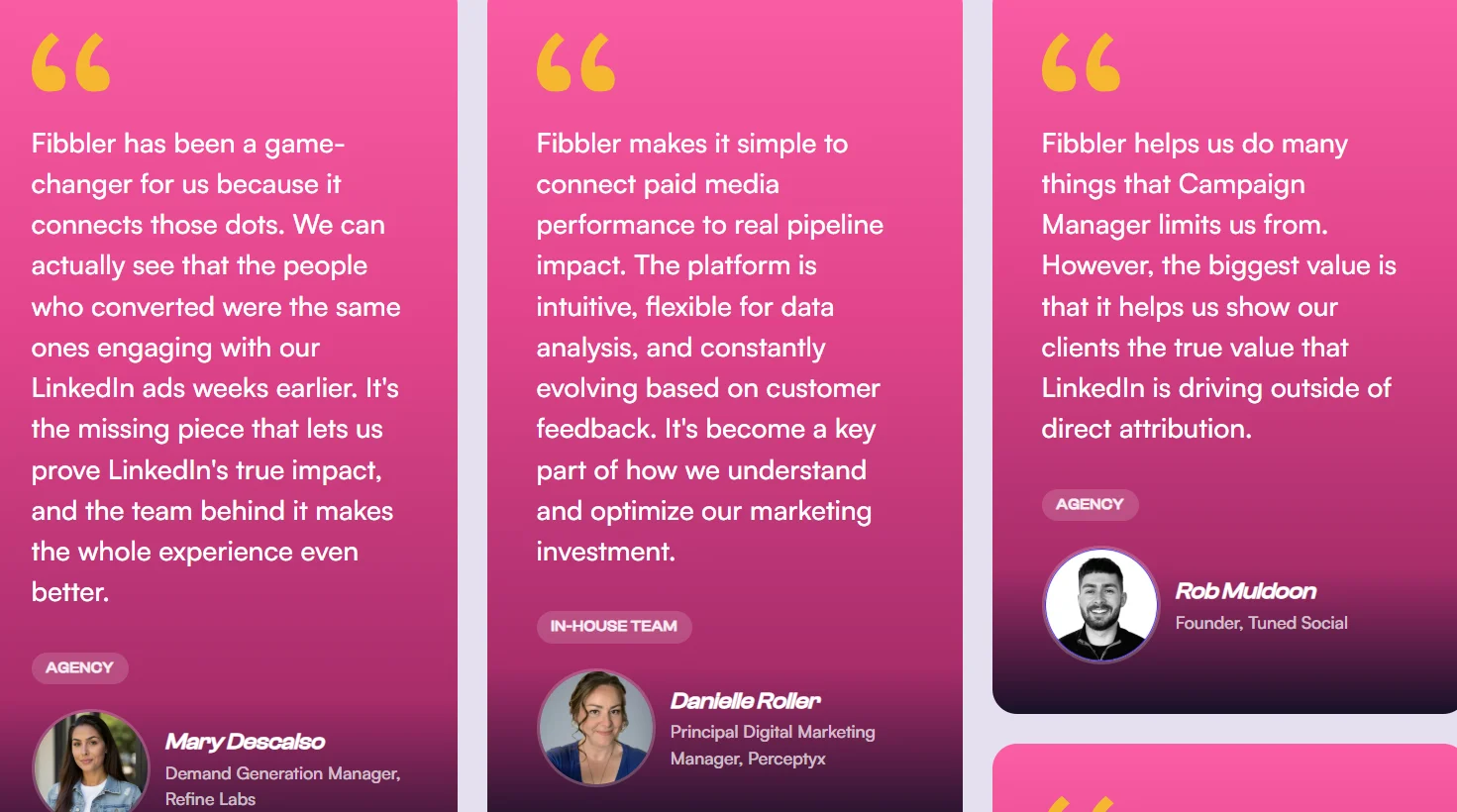
Our Meta Ads Attribution add-on is live, with a 14-day free trial, and built on the same model as our Google Ads add-on.
As an official LinkedIn Marketing Partner, we spend our days inside customer CRMs, ad platforms, and integration workflows, not writing about them from the outside. That practitioner view shapes the criteria we use to evaluate each of the ten tools below.
The 10 Best Meta Ads Attribution Tools: Full Comparison Table
| Tool | Best For | Integration Type | G2 Rating | Pricing |
|---|---|---|---|---|
| Fibbler | Company-level Meta, LinkedIn, and Google Ads attribution for B2B | CRM + LinkedIn + Google + Meta | 4.9/5 | From $89/mo |
| Cometly | Server-side conversion tracking across Meta and other paid channels | Website + Ad platforms + CRM | 4.8/5 | Custom |
| Triple Whale | Shopify-native first-party attribution and ROAS | Shopify + Ad platforms | 4.5/5 | Custom |
| Northbeam | Machine-learning multi-touch attribution for high-spend DTC | Ad platforms + Website | 4.5/5 | From $1,500/mo |
| Hyros | Long sales cycles and high-ticket funnels with call tracking | CRM + Ad platforms + Call tracking | NA | Custom |
| Dreamdata | Full-funnel B2B attribution across the buyer journey | CRM + Ad platforms + Warehouse | 4.7/5 | Free / Custom |
| HockeyStack | B2B revenue analytics with account-level attribution | CRM + Ad platforms + Website | 4.4/5 | Custom |
| Factors.ai | Account identification, ABM, and multi-touch attribution | CRM + Intent + Ad platforms | 4.5/5 | Free / Basic starts from $6k/month |
| Ruler Analytics | Multi-channel attribution including offline calls and forms | CRM + Call tracking + Ad platforms | 4.6/5 | From $400/mo |
| Meta Ads Manager | Free, native reporting inside the Meta platform | Native Meta | N/A | Free |
Sources: vendor pricing pages and G2 as of September 2026. Custom-priced tools require a demo for accurate figures.
1. Fibbler
Most Meta ads attribution tools solve one job well, which is capturing conversion signals Meta’s pixel misses so ecommerce brands can trust their ROAS. Fibbler solves a different job.
It identifies the companies engaging with your LinkedIn, Google, and Meta Ads and pushes that engagement straight into your CRM. Fibbler is also SOC 2 Type 1 compliant.
The Meta Ads Attribution product follows the same model as Fibbler’s Google Ads Attribution add-on. It reveals the company behind an anonymous click on your Facebook or Instagram ad, validates whether it matches your ICP, and syncs that engagement to HubSpot, Salesforce, Attio, or Pipedrive in one unified customer journey.
The approach is company-level rather than person-level, and paid-channel rather than full-stack. For B2B teams running paid campaigns across LinkedIn, Google, and Meta to reach a defined set of accounts, that focus is the point.
Key Features
- Company-level identification: See which companies engage with your Meta, LinkedIn, and Google Ads, matched to named accounts in your CRM
- CRM-native sync: Push ad engagement data directly into HubSpot, Salesforce, Attio, or Pipedrive at the account level
- Unified customer journey: Cross-channel view covering LinkedIn, Google, and Meta touchpoints in one dashboard
- Audience Insights: Segment paid traffic by company size and industry to validate ICP fit before scaling spend
- Intent signals: Push engaged-account signals into Clay, Slack, Zapier, or Attio to trigger outbound workflows
Pricing
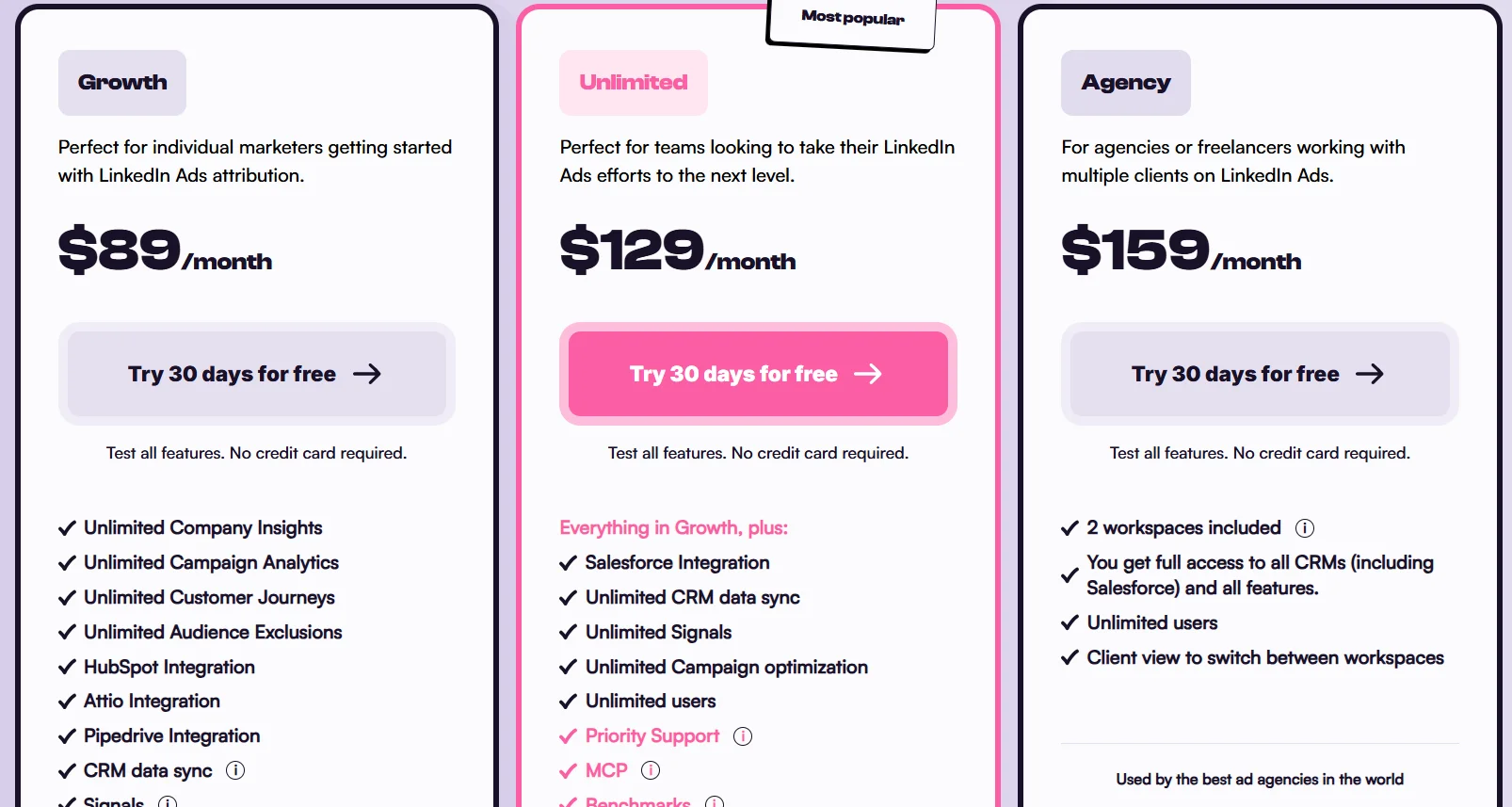
- Growth: $89/month (single user, 30-day free trial, no credit card required)
- Unlimited: $129/month (unlimited users, Salesforce integration included)
- Agency: $159/month (two workspaces, unlimited users)
- Google Ads Attribution add-on: $59/account/month, 14-day free trial, up to 1,000 identified companies per month
- Meta Ads Attribution add-on: $59/month ($699/year), 14-day free trial, up to 1,000 identified companies per month
Annual billing saves up to 22% across all base plans.
Pros
- The only B2B-native tool on this list that identifies companies across paid channels and syncs them straight to a CRM
- Transparent monthly pricing with no annual lock-in required, a rare thing in this category
- Official LinkedIn Marketing Partner, so LinkedIn engagement data is verified rather than scraped or estimated
- Setup takes under 30 minutes with no pixel installation or engineering resources needed
- No personally identifiable data stored, only company and deal-level, so GDPR compliance stays simple
- SOC 2 Type 1 compliant, audited by Sensiba in September 2026, with all customer data hosted in the EU
Cons
- Meta Ads Attribution is an add-on that needs a paid Fibbler plan with LinkedIn Ads and a CRM connected, so it isn’t a fit for teams that only run Meta
G2 Rating
4.9/5 (32 reviews). See how Meta Ads Attribution works or try Fibbler free for 30 days.
2. Cometly
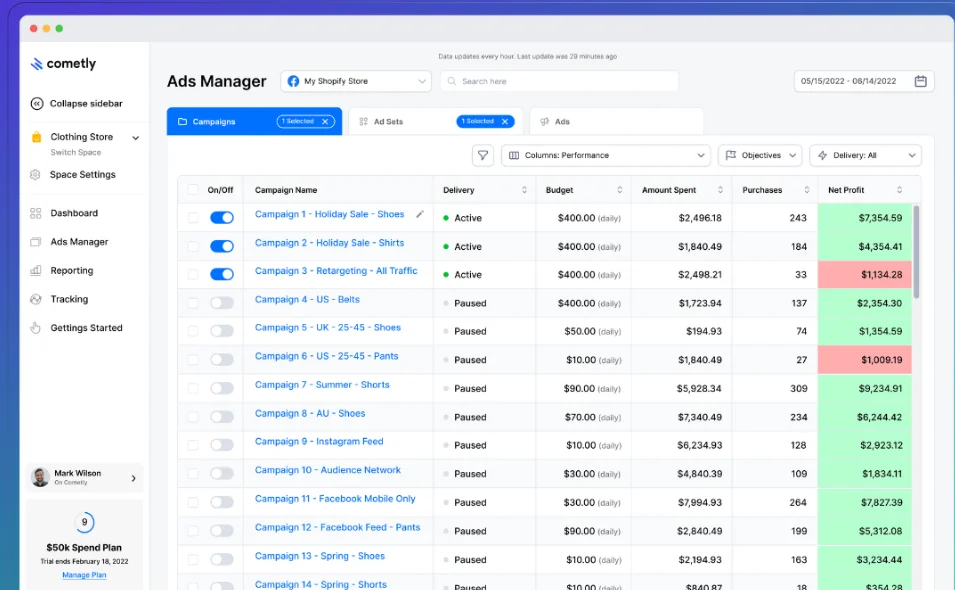
Cometly uses server-side tracking to capture conversion events Meta’s pixel loses to browser restrictions, ad blockers, and iOS App Tracking Transparency, then sends those enriched events back into Meta’s Conversions API so the delivery algorithm has clean signal to optimize on.
It syncs to HubSpot, Salesforce, and other CRMs across Meta, Google, and TikTok. That makes it the closest incumbent to a workable B2B solution for teams whose main complaint about Meta reporting is “the pixel undercounts our real conversions by 30 percent.”
What it doesn’t do is company-level identification, so attribution stays anchored to individual sessions rather than named ICP accounts.
Key Features
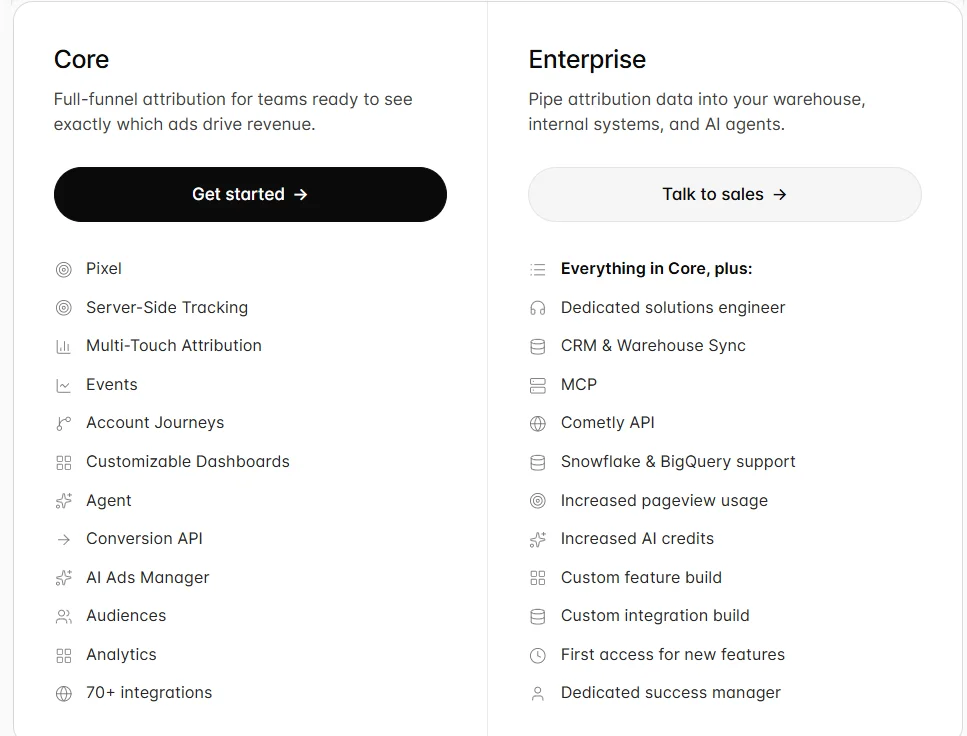
- Server-side tracking: Pixel and Conversions API integration for iOS-resilient event capture
- Multi-touch attribution: Models spanning Meta, Google, TikTok, and other paid channels
- CRM sync: Native integration with HubSpot, Salesforce, and Close, with account-level journey mapping
- Conversion feedback: Send verified revenue events back to Meta, Google, and TikTok to improve platform delivery
Pricing
Custom pricing, quoted based on ad spend or monthly session volume. No public price on the pricing page and no free trial. A demo is required to get a number.
Pros
- Server-side tracking recovers a meaningful share of conversion data lost to browser and iOS restrictions
- Works for both ecommerce and B2B SaaS use cases, unlike most ecommerce-only competitors
- Feeds Meta’s algorithm cleaner conversion signals, which typically improves delivery over time
Cons
- No published pricing makes budgeting genuinely difficult before you commit to a sales cycle
- No company-level identification, so B2B teams still can’t see which named accounts are engaging
- Only 36 G2 reviews, so buyer feedback signal is still developing
G2 Rating
4.8/5 (36 reviews)
3. Triple Whale
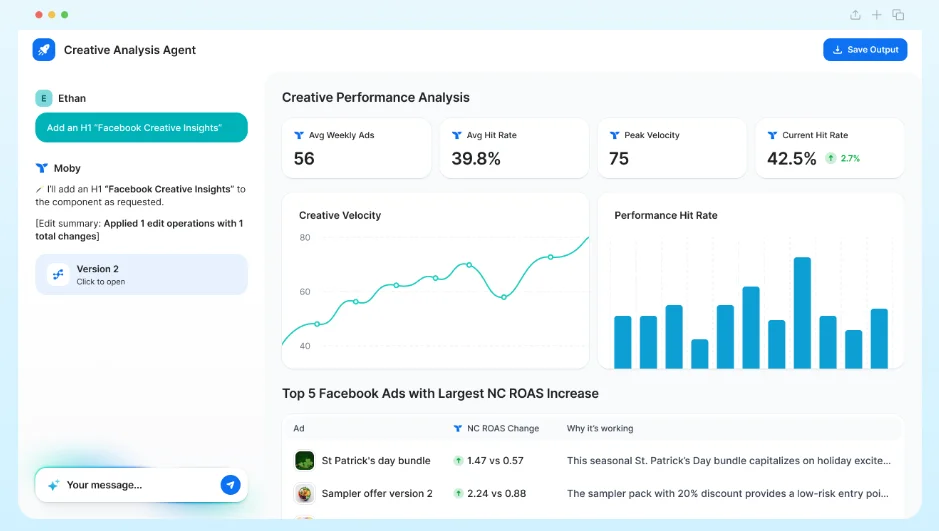
Triple Whale is the benchmark ecommerce attribution platform for Shopify brands, and probably the most-recommended Meta attribution tool on the internet if you’re a DTC operator. Its first-party Triple Pixel captures conversion data the native Meta pixel misses, and its dashboard blends Meta ROAS with Google, TikTok, and email revenue in one view.
None of that translates cleanly to B2B. Triple Whale expects revenue events to fire on-site inside Shopify, and CRM pipeline that closes over 90 days doesn’t fit that shape.
If you’re on Shopify and want to trust your Meta ROAS again, it’s a strong pick. If you’re on HubSpot and want to know which accounts your Instagram campaign reached, it isn’t.
Key Features
- Triple Pixel: First-party, server-side conversion tracking that captures more Meta events than the native pixel
- Blended ROAS dashboard: Multi-touch view across Meta, Google, TikTok, and email revenue in one place
- Creative analytics: Track which ad creatives drive actual revenue, backed by a deep Shopify integration
- Moby AI operator: Automated performance analysis and campaign recommendations
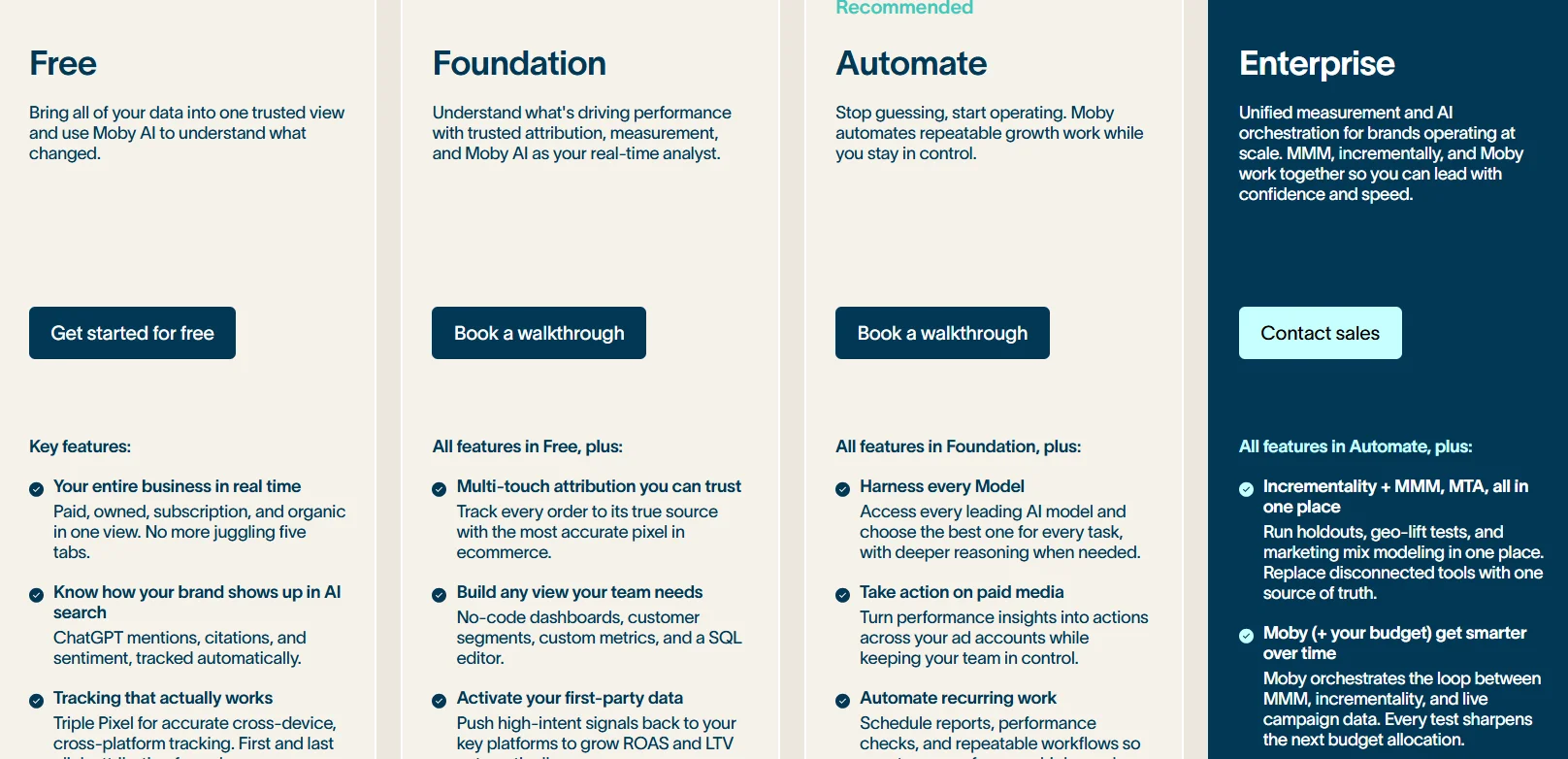
Pricing
- Free
- Foundation: Custom pricing. Please contact sales
- Automate: Custom pricing. Please contact sales
- Enterprise: Custom pricing. Please contact sales
Paid plans scale with annual Shopify GMV and run on 12-month contracts.
Pros
- The free tier is genuinely useful, not a stripped-down teaser like most competitors
- Triple Pixel plus best-in-class creative analytics for Meta-heavy ecommerce campaigns
- 478+ G2 reviews and 60,000+ brands using it, the largest sample size on this list
Cons
- Built for Shopify, not for B2B, offline retail, or non-Shopify storefronts
- Costs rise steeply as GMV grows, and 12-month contracts limit flexibility
- Steep learning curve on the Foundation and Automate tiers for teams new to attribution
G2 Rating
4.5/5 (478+ reviews)
4. Northbeam
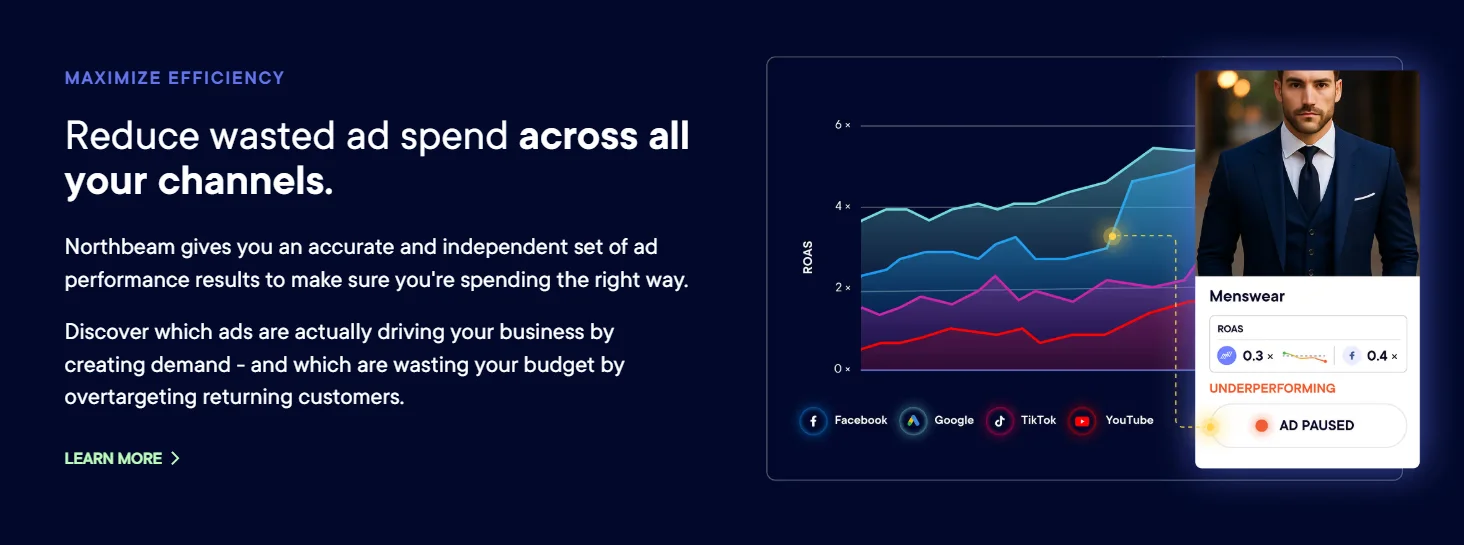
Northbeam sits above Triple Whale in the ecommerce attribution stack. It’s built for DTC brands spending $50,000 a month or more on paid media, with a machine-learning attribution model called Northbeam Apex that lets teams tune the credit weight assigned to each touchpoint rather than picking between generic last-click or linear defaults.
For Meta specifically, that means brands can properly value view-through conversions from prospecting campaigns rather than starving them of budget. Northbeam also adds cross-channel attribution and media mix modeling on top of tactical MTA.
Key Features
- Northbeam Apex: Customizable multi-touch attribution with adjustable credit weighting per touchpoint
- View-through attribution: Credit Meta prospecting campaigns that build awareness without earning a click
- Cross-channel journeys: Map Meta, Google, TikTok, and email touchpoints in one unified view
- Media mix modeling: Macro budget allocation layered on top of tactical MTA reporting
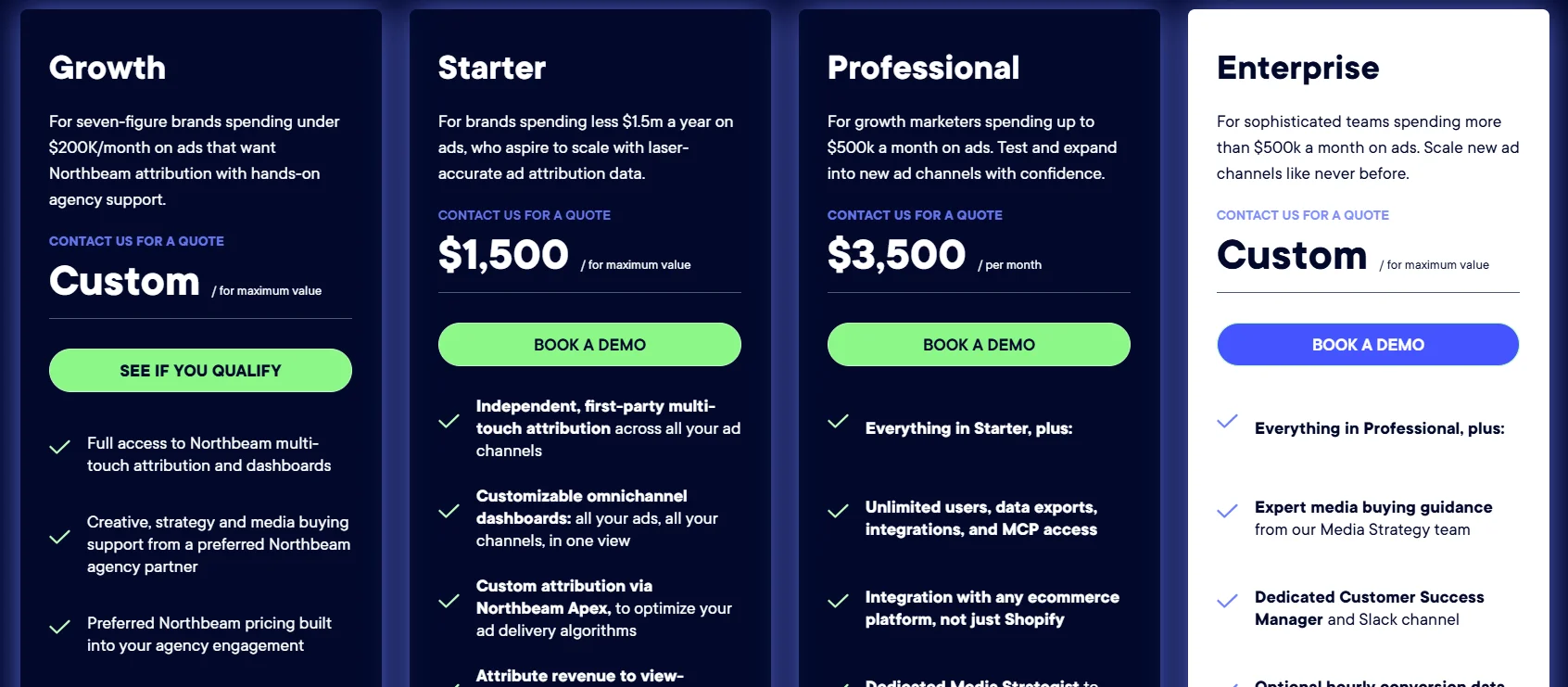
Pricing
- Starter: $1,500/month (brands under $1.5M/year in ad spend)
- Professional: custom pricing, typically $2,500-$3,500/month for brands over $250K/month spend
- Enterprise: custom pricing (brands over $500K/month spend)
Pros
- Custom attribution weighting lets you avoid the assumptions baked into off-the-shelf tools
- View-through attribution and media mix modeling add both tactical and macro budget views
- Includes up to $150K in ad credits on the Professional plan, which offsets subscription cost
Cons
- The $1,500/month starting price rules out smaller brands and any B2B team testing Meta
- Built for ecommerce economics, so no fit for pipeline-based B2B measurement
- Only 16 G2 reviews as of writing, so the rating carries limited statistical weight
G2 Rating
4.5/5 (16 reviews)
5. Hyros
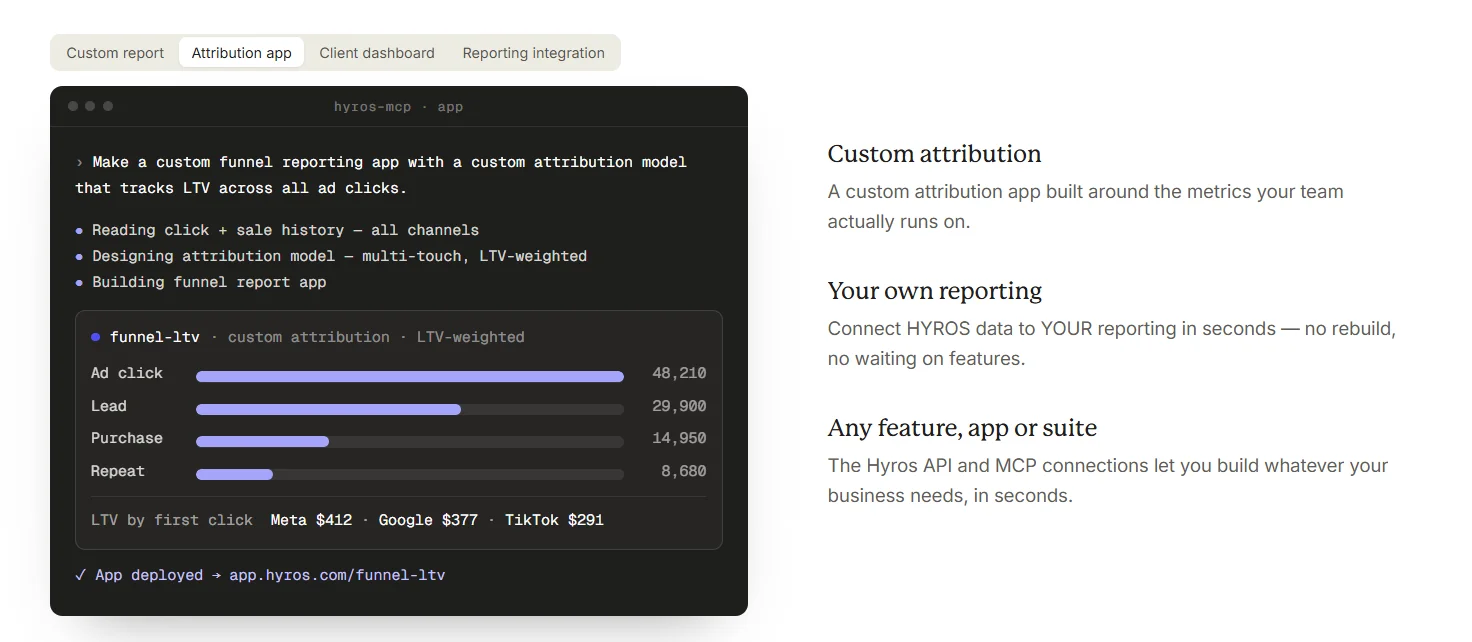
Hyros is the specialist tool for advertisers whose sales cycles run in weeks or months and whose conversions happen off the website, whether over the phone, at a webinar, or through a long nurture sequence. Info product companies, coaching businesses, and high-ticket DTC brands make up most of its customer base.
For Meta advertising, that means Hyros can attribute a $10,000 coaching sale to the Instagram ad that started the journey 60 days earlier, even if the buyer clicked from mobile, watched two webinars from desktop, and eventually purchased on a phone call.
Email-based identity matching stitches those touches together, with call tracking layered on top.
Key Features
- Email-based identity matching: Stitch touches across devices and sessions with lookback windows up to a year
- Call and offline attribution: Attribute phone and in-person conversions back to specific Meta campaigns
- AI remarketing (AIR): Build smarter audiences based on tracked long-cycle buyer behavior
- Native integrations: Connect to major CRMs, payment processors, and funnel builders out of the box
Pricing
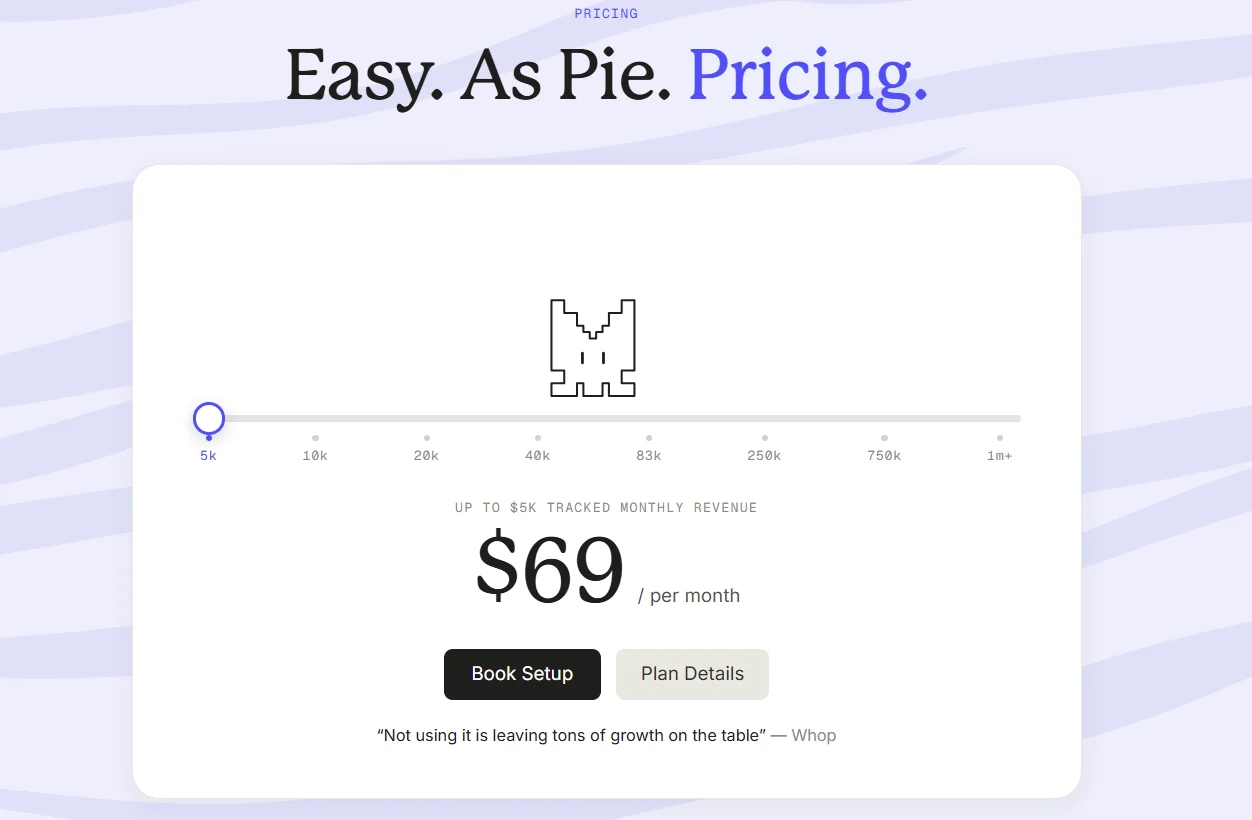
Custom pricing across three plans (Business, Shopify, and Agency), each quoted based on tracked monthly revenue. A demo is required to get a number, and there’s no free trial. It starts off at $69/month
Pros
- Year-long identity tracking, cross-device stitching, and call attribution are genuinely rare in this category
- Real, purpose-built fit for info-product, coaching, and high-ticket sales funnels
- Detects missed conversions and feeds them back to Meta’s algorithm to improve optimization
Cons
- Only 2 G2 reviews as of writing, so buyer feedback signal is thin
- Custom pricing across all tiers makes early evaluation difficult without a sales conversation
- Setup is more complex than pixel-only tools, requiring email tracking configuration
G2 Rating
NA
6. Dreamdata
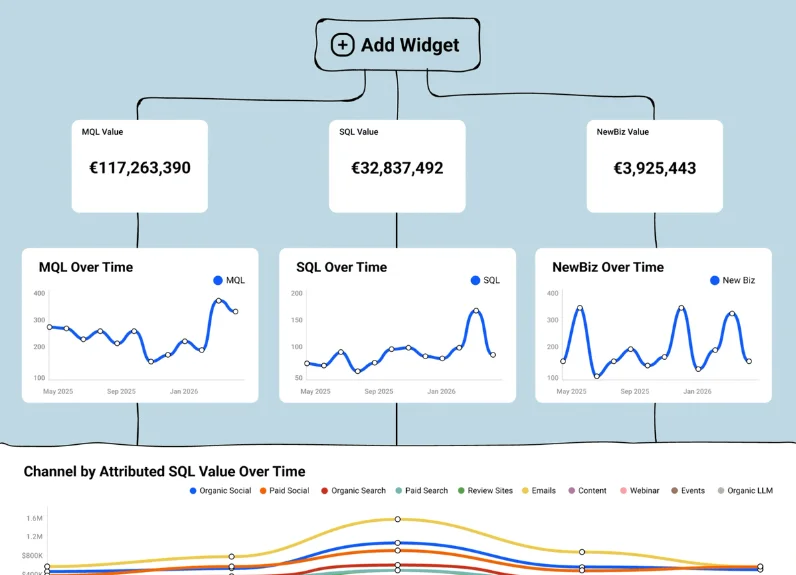
Dreamdata is one of the two most established B2B attribution platforms on this list, alongside HockeyStack. It builds an account-level buyer journey by stitching together CRM data, ad platform data, marketing automation events, and website behavior into a single timeline.
For Meta, that means every impression, click, and video view gets mapped to the account it belongs to and placed on the same timeline as sales stage progression.
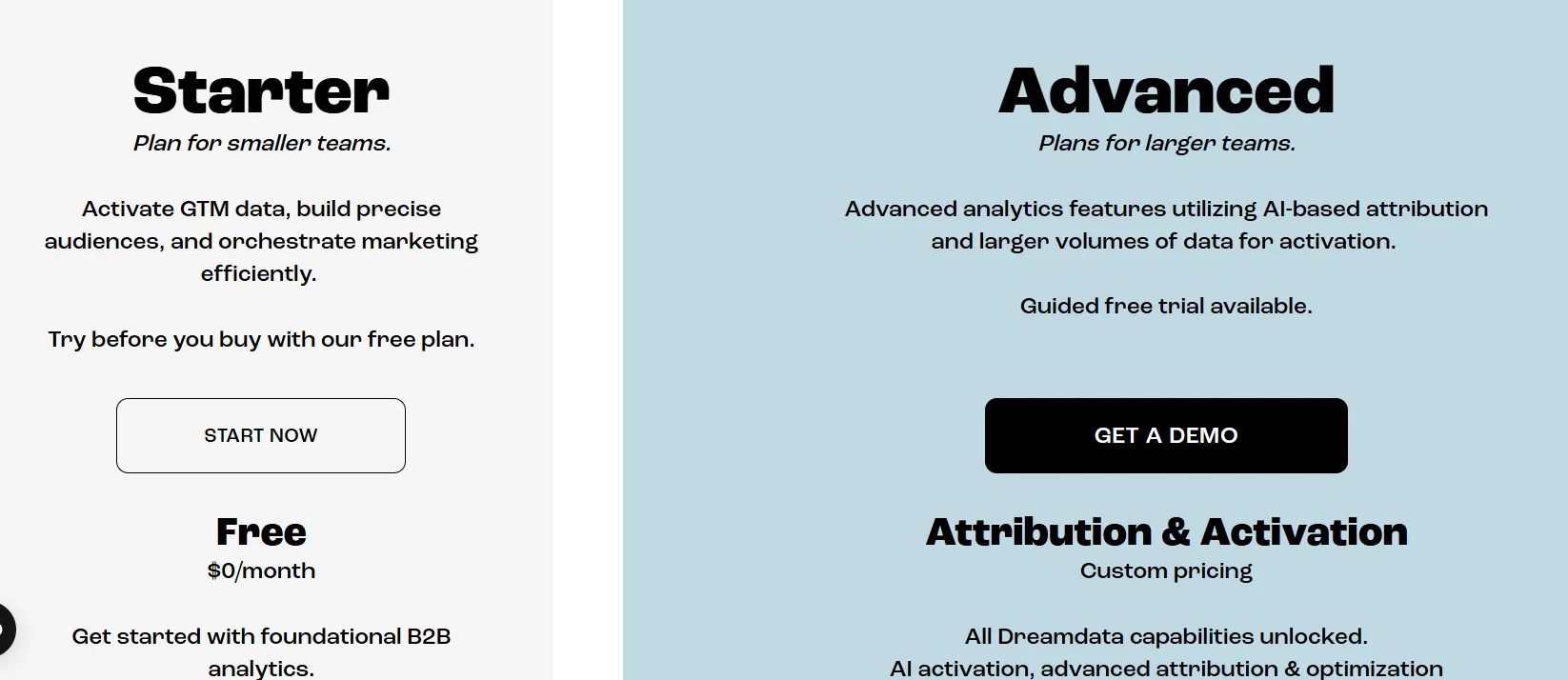
The free tier is a real product with B2B web analytics, company identification, and engagement scoring, enough to see whether Meta traffic is even reaching your ICP before committing to the paid layer.
Key Features
- Account-level buyer journey: Stitch paid, organic, and CRM events into one account timeline
- AI-powered attribution: Multi-touch models across Meta, Google, LinkedIn, and other channels
- Audience activation: Sync CRM segments back to Meta, LinkedIn, and Google ad platforms
- Warehouse sync: Push data into BigQuery, Snowflake, and other warehouses for custom BI
Pricing
- Free: B2B web analytics, company identification, engagement scoring, 2-month history
- Attribution Advanced: custom pricing, typically running into the mid-five figures annually
Annual billing available with volume discounts.
Pros
- Free tier is a real product, not marketing bait, and worth spinning up on its own merits
- Deep multi-source stitching and 273 G2 reviews, the largest sample size of any B2B tool on this list
- Data warehouse sync into BigQuery and Snowflake supports custom BI reporting
Cons
- Full attribution and activation features sit behind the custom-priced Advanced tier
- Implementation isn’t lightweight, so plan for weeks of setup, not hours
- Attribution Advanced pricing typically runs into mid-five figures annually, out of reach for smaller teams
G2 Rating
4.7/5 (273 reviews)
7. HockeyStack
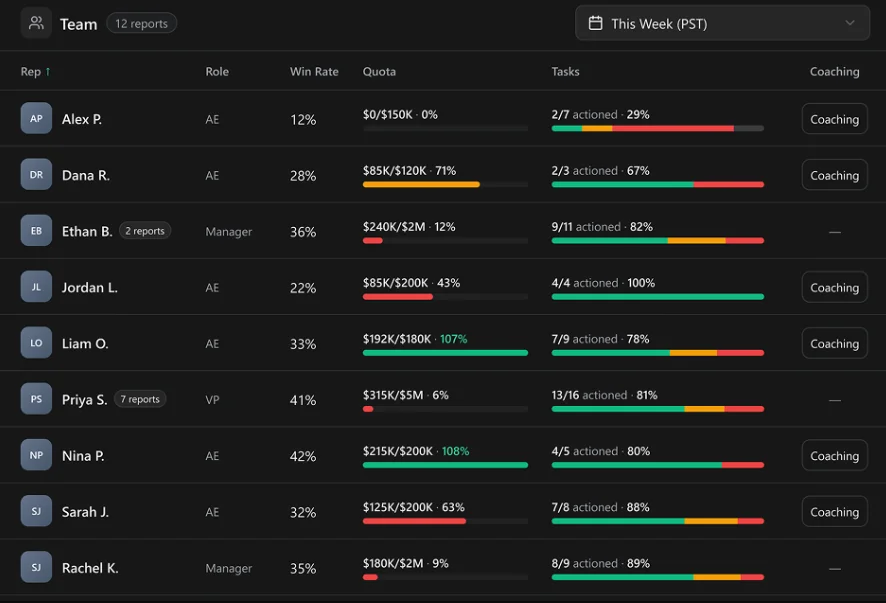
HockeyStack pitches itself as GTM analytics rather than pure attribution. The platform unifies marketing, sales, and product data into a single graph and layers Odin (its AI analyst) on top, so revenue teams can ask plain-English questions about what’s driving pipeline instead of building fresh custom reports.
For Meta specifically, that translates to account-level attribution mapped against CRM pipeline stages, plus lift reports estimating whether Meta campaigns are creating new pipeline or picking up credit for demand that would have converted anyway. It’s designed for teams with a dedicated analytics resource.
Key Features
- Multi-touch attribution: Map Meta engagement to CRM pipeline stages and closed revenue
- Odin AI analyst: Natural-language performance queries and diagnostic reporting
- Lift and incrementality reports: Estimate whether Meta campaigns drive new pipeline or absorb existing demand
- Cookieless tracking: Account scoring and audience sync into ad platforms without third-party cookies
Pricing
Custom pricing for both the GTM Intelligence and GTM Execution tiers. Third-party sources place entry pricing around $1,399-$2,200/month, and annual contracts are typical. Demo required, with no self-serve trial.
Pros
- AI analyst meaningfully reduces the time spent building one-off reports
- Cookieless architecture future-proofs against browser and privacy changes
- Combines attribution, ABM, and sales intelligence in one platform, reducing tool sprawl
Cons
- Enterprise pricing and annual contracts make it a poor fit for growing SMB teams
- No published pricing means every evaluation starts with a sales cycle
- Steep learning curve for teams without a dedicated analytics resource
G2 Rating
4.4/5 (82 reviews)
8. Factors.ai
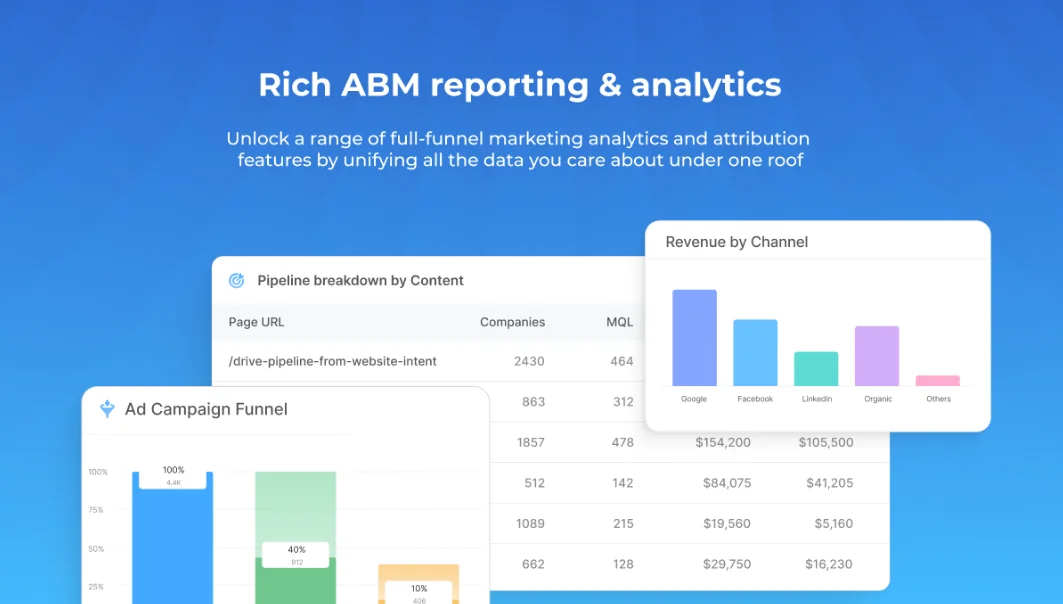
Factors.ai combines account identification for anonymous website traffic, multi-touch attribution across paid channels, and ABM-oriented ad automation in one platform. Its waterfall of identification providers unmasks a larger share of accounts than single-source tools, which matters when Meta traffic to your site is otherwise anonymous.
The catch for Meta advertisers is that Factors’ ad-activation layer, LinkedIn AdPilot in particular, is where much of the differentiated value lives, and Meta-specific automation is thinner. Teams running Meta alongside LinkedIn get more out of it than teams running Meta alone.
Key Features
- Waterfall identification: Unmask a larger share of anonymous website visitors than single-source tools
- Multi-touch attribution: Track influence across Meta, LinkedIn, Google, and organic channels
- LinkedIn AdPilot: Automate LinkedIn Ads audience management as an add-on layer
- CRM sync and alerts: Integrate with HubSpot and Salesforce, with Slack alerts for target account engagement
Pricing
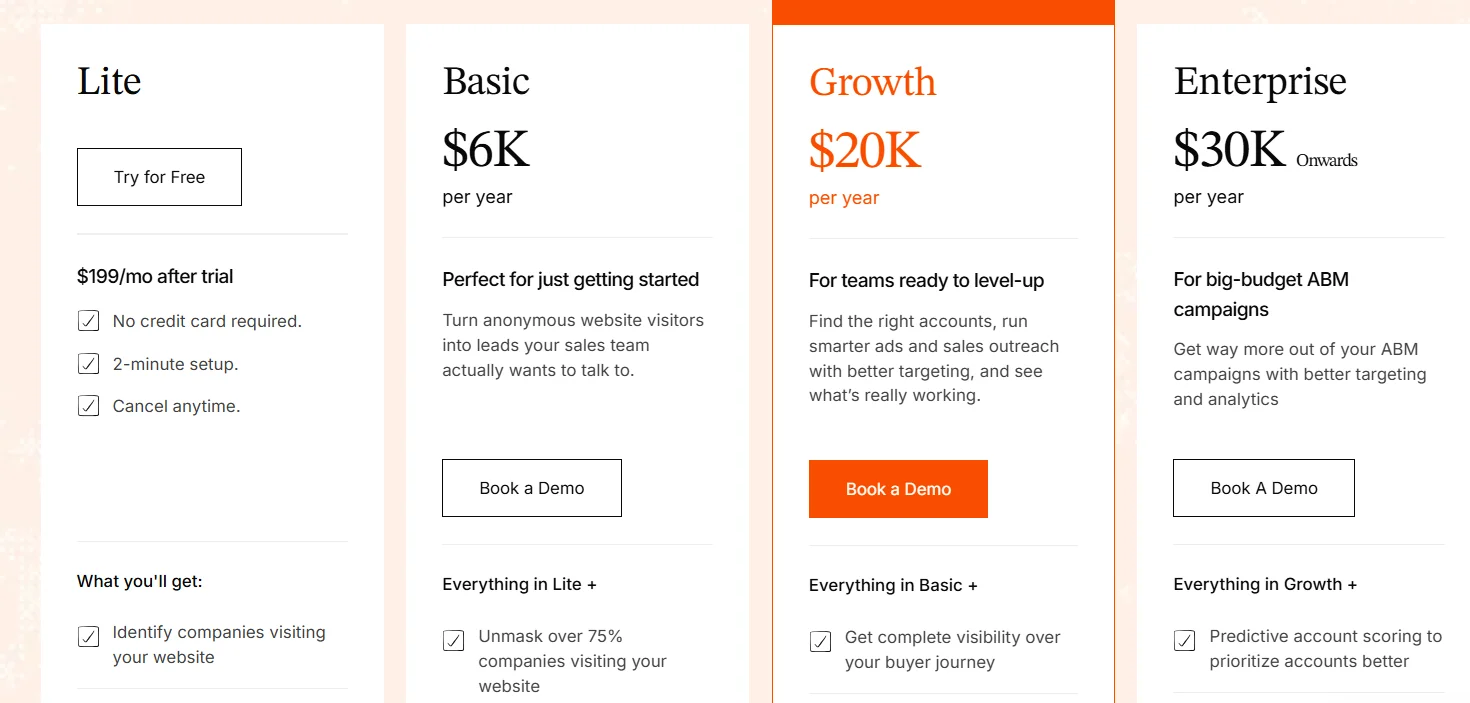
Free tier remains available. Paid tiers now require a demo. Factors.ai removed published pricing from its website in 2026, and last public reference points showed a Basic plan around $6000/month, with add-ons materially increasing effective cost.
Pros
- Strong account identification breadth for anonymous Meta and organic traffic
- Full-stack ABM approach if you’re combining Meta with LinkedIn in the same funnel
- Free tier gives real evaluation runway before committing to a paid contract
Cons
- Paid pricing is now demo-gated, complicating early budget planning
- Add-ons like LinkedIn AdPilot materially raise effective monthly cost beyond the base tier
- Meta-specific automation is thinner than the LinkedIn AdPilot layer
G2 Rating
4.5/5 (220 reviews)
9. Ruler Analytics
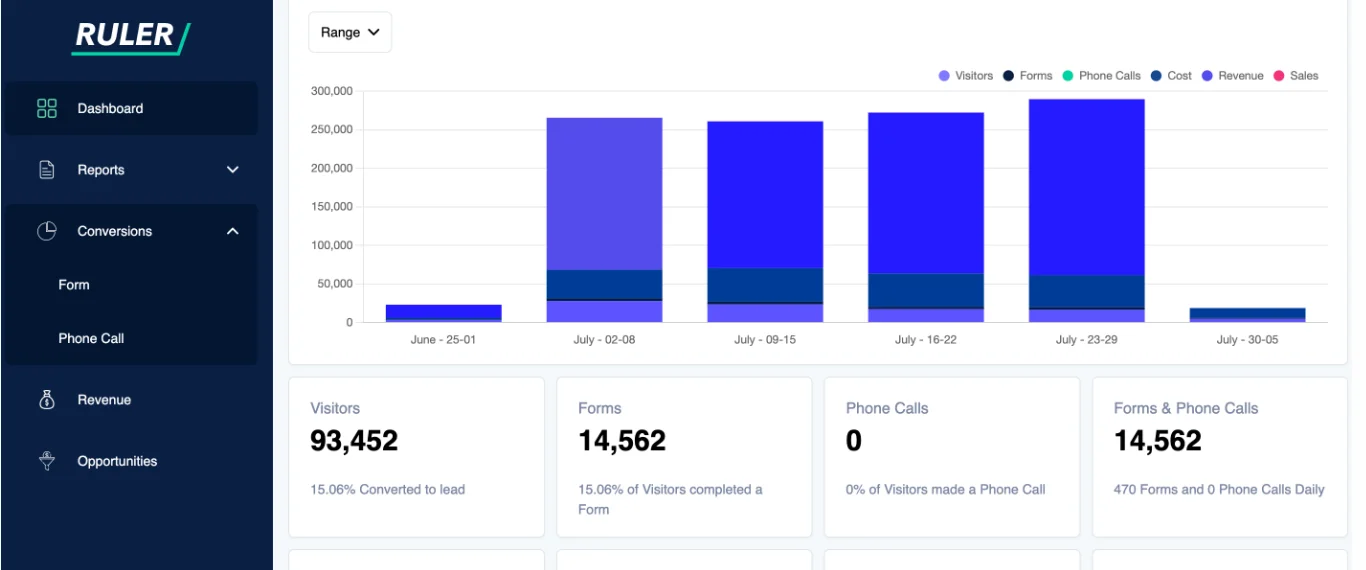
Ruler Analytics attributes revenue to Meta by capturing the touchpoints most attribution tools ignore (inbound phone calls, form submissions, and live chat conversations) and matching them back to the original ad click.
For B2B teams where a meaningful share of Meta conversions happen through a sales conversation rather than a checkout page, that offline coverage is the difference between accurate attribution and a large hole in the model.
Ruler also syncs closed revenue from the CRM back to Meta, so the platform’s algorithm can optimize toward closed deals rather than form fills.
Key Features
- Offline conversion tracking: Attribute calls, form submissions, and live chat back to the original Meta click
- Multi-touch attribution: Coverage across paid, organic, and offline channels in one model
- CRM sync: Native integration with HubSpot, Salesforce, and Pipedrive
- Revenue sync: Push closed revenue back to Meta and Google Ads for algorithm optimization
Pricing
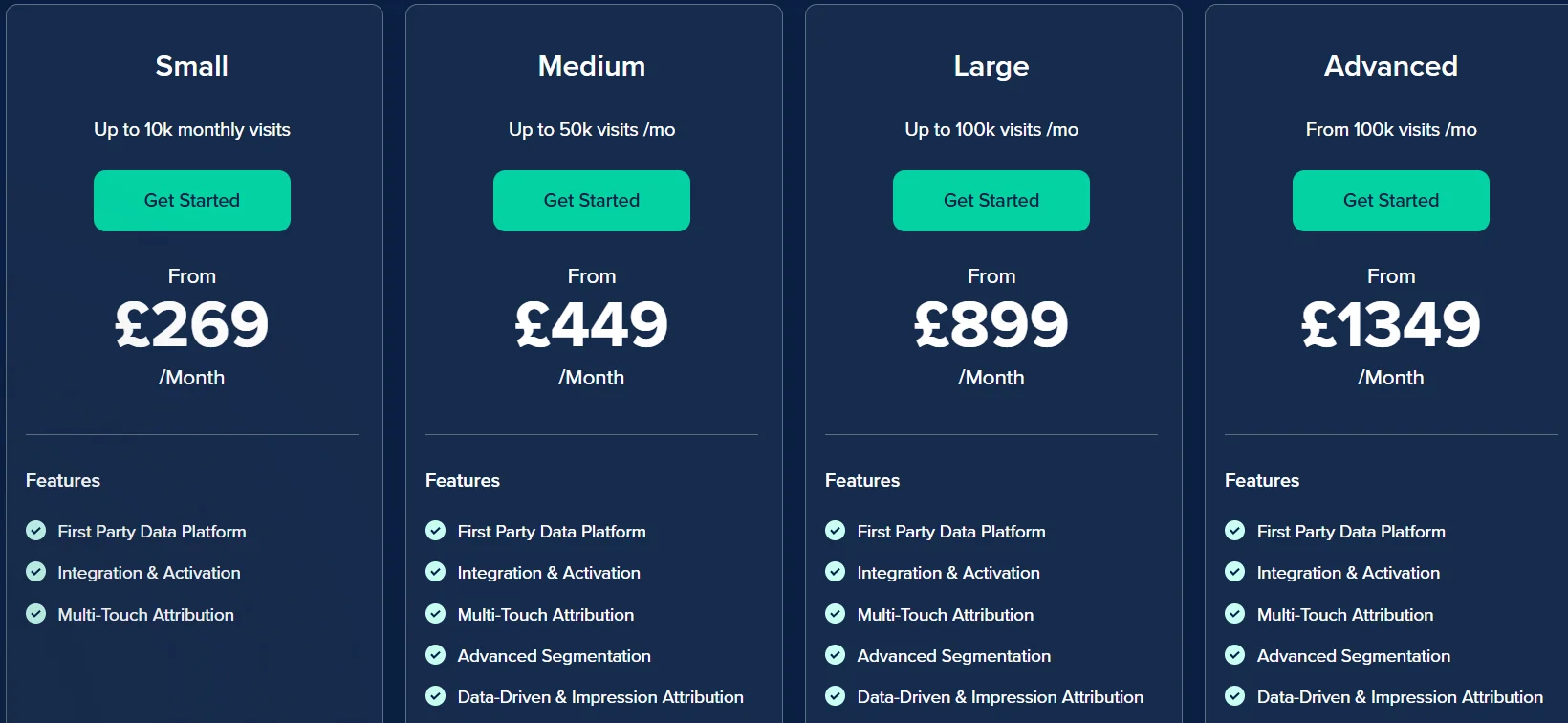
- Small: £269/month (up to 10K monthly visits)
- Medium: £449/month (up to 50K monthly visits)
- Large: £899/month (up to 100K monthly visits)
- Advanced: £1349/month (100K+ monthly visits)
Pros
- Offline coverage (calls, forms, chat) is the strongest of any tool on this list
- Meaningfully cheaper than Dreamdata or HockeyStack at comparable traffic volumes, with a dedicated CSM on every plan
- Marketing mix modeling on the top tier for macro budget planning alongside tactical attribution
Cons
- Pricing scales with website traffic, so growing sites can outgrow tiers quickly
- Less depth for account-level ABM programs than pure B2B tools like Dreamdata
- Data-driven attribution requires the Medium plan or higher, so the smallest tier is limited
G2 Rating
4.6/5 (30 reviews)
10. Meta Ads Manager (Native Attribution)
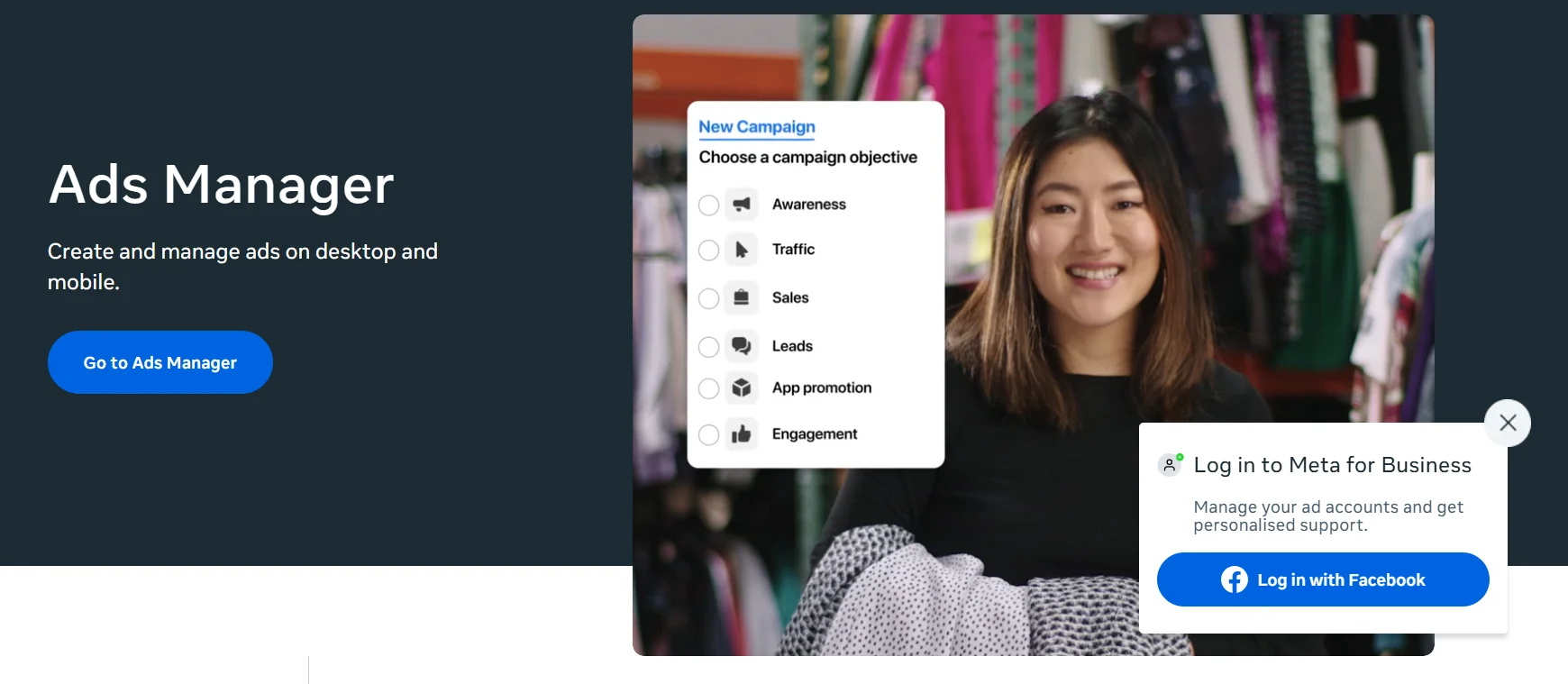
Meta Ads Manager is on this list because it exists in every ad account and it’s free. It reports conversions inside Meta’s ecosystem using configurable 1-day view and 7-day click windows, offers the Conversions API for server-side event capture, and layers modeled conversions on top of what it can directly observe post-iOS 14.5.
Where it stops is anything happening outside Meta’s own view, such as pipeline stages in a CRM, revenue that shows up 60 days later, and cross-channel attribution alongside Google and LinkedIn. Every other tool on this list exists precisely because Ads Manager’s native reporting stops before it answers those questions.
Key Features
- Native campaign reporting: Impressions, clicks, and conversions for every campaign, ad set, and ad
- Attribution windows: Configurable 1-day view and 7-day click windows
- Conversions API: Server-side event capture that extends beyond the browser pixel
- Modeled conversions: Fill measurement gaps left by iOS-driven signal loss
Pricing
Free, included with every Meta ad account. You pay only for actual ad spend.
Pros
- Zero additional cost, since every Meta advertiser already has it available
- Direct access to Meta’s delivery algorithm and Conversions API for improved signal quality
- A/B testing built directly into the platform for creative, audience, and placement experiments
Cons
- Cannot connect Meta impressions or clicks to CRM pipeline or closed revenue
- Ecosystem-locked, so no cross-channel view alongside Google Ads or LinkedIn Ads
- Attribution model gives all credit to Meta even when other channels contributed to the conversion
G2 Rating
N/A (not rated on G2 as a standalone attribution tool)
Choosing the Right Meta Ads Attribution Tool
The right Meta ads attribution tool depends less on which platform tops most rankings and more on the shape of your business. Shopify DTC brands tracking blended ROAS should start with Triple Whale’s free tier and graduate to Northbeam once monthly ad spend crosses $50,000.
High-ticket coaches, course creators, and long-cycle DTC brands with phone or webinar-based sales will find Hyros’ year-long identity tracking genuinely differentiated.
For B2B teams, the decision changes shape entirely. Dreamdata and HockeyStack are the two most mature options for full-funnel B2B attribution, though both come with enterprise pricing and multi-week implementations.
Factors.ai is a lighter-weight alternative if account identification is your bigger need. Ruler Analytics closes the offline-conversion gap for B2B teams whose Meta traffic turns into calls or demo requests before revenue.
For B2B teams running paid ads across LinkedIn, Google, and Meta to reach a defined set of ICP accounts, Fibbler is built explicitly for that use case. Meta Ads Attribution is live as an add-on next to the LinkedIn and Google products, all at self-serve monthly pricing, a fraction of what Dreamdata or HockeyStack cost.
And whichever tool you pick, keep Meta Ads Manager open. Every attribution decision starts with the campaigns built there.
Prove Your Meta Ad Spend Drives Pipeline, Not Just Clicks
Every tool on this list solves a real problem. The question is which one matches yours. Shopify brands need ROAS they can trust after iOS. High-ticket funnels need attribution that survives the 60-day gap between click and sale.
B2B teams need to know which companies their ads reach, and which of those become pipeline. If that last one describes your team, Fibbler is built for exactly that question.
Start with LinkedIn Ads attribution and add Meta Ads Attribution with its own 14-day free trial. The base plan is 30 days free, no credit card required. Start your free trial.
Frequently Asked Questions
What’s the Difference Between Meta Ads Attribution and Meta Ads Manager Reporting?
Meta Ads Manager reports activity inside Meta’s ecosystem, meaning impressions, clicks, and conversions that fire on your site inside a configured attribution window.
Dedicated attribution tools extend that measurement to conversions the pixel can’t see (server-side events, iOS-restricted traffic, offline sales) and connect ad engagement to downstream outcomes like CRM pipeline stages or blended cross-channel ROAS. Ads Manager tells you what happened inside Meta; an attribution tool tells you what happened next.
Do B2B Teams Actually Need a Meta Attribution Tool, or Is LinkedIn Attribution Enough?
It depends on whether Meta is part of your paid mix. Plenty of B2B teams still limit themselves to LinkedIn and Google, but a growing set (particularly in prosumer SaaS, DTC-adjacent B2B, and creator-tool markets) are running meaningful Meta budgets.
Those teams need attribution that connects Facebook and Instagram engagement to the same CRM records LinkedIn and Google already touch, or you end up managing two separate views of pipeline.
Can I Use Meta’s Conversions API Instead of a Dedicated Attribution Tool?
CAPI and dedicated attribution solve different problems. CAPI sends server-side conversion events back to Meta so its delivery algorithm has cleaner signal, which improves delivery.
It doesn’t answer questions like “which Meta campaigns influenced deals that closed last quarter” or “which accounts saw our ads three times before entering pipeline.” Attribution tools answer those. Most mature B2B teams run both, with CAPI for delivery and an attribution layer for reporting.
How Much Does a Meta Ads Attribution Tool Cost?
Pricing across these tools spans nearly two orders of magnitude. Fibbler starts at $89/month with a 30-day free trial, and Meta Ads Attribution is a $59/month add-on. Ruler Analytics starts at £269/month. Northbeam starts at $1,500/month. HockeyStack typically runs $1,399-$2,200/month at entry. Enterprise B2B contracts commonly land between $15,000 and $50,000 per year once implementation and support are factored in.
Does Fibbler Currently Attribute Meta Ads?
Yes. Fibbler’s Meta Ads Attribution is available as an add-on for $59/month, with a 14-day free trial. It follows the same model as our Google Ads add-on. It identifies the companies engaging with your Facebook and Instagram ads, validates whether they match your ICP, and syncs that engagement into HubSpot, Salesforce, Attio, or Pipedrive.
It needs a paid Fibbler plan with LinkedIn Ads and a CRM connected. New to Fibbler? Start your free trial, or see how Meta Ads Attribution works.
Written by

Adam Holmgren
CEO @ Fibbler

Prove paid ads drive pipeline
Fibbler helps you see which companies view or engage with your LinkedIn, Google and Meta Ads, and connect them to pipeline and revenue in your CRM.
Try 30 days for free
Prove paid ads drive pipeline
Fibbler helps you see which companies view or engage with your LinkedIn, Google and Meta Ads, and connect them to pipeline and revenue in your CRM.
Try 30 days for free